Terracotta Army - Technology and Mystery of 8000 Statues
Life-size clay soldiers guarding Qin Shi Huang tomb. Each face unique, coloring technology still unexplained
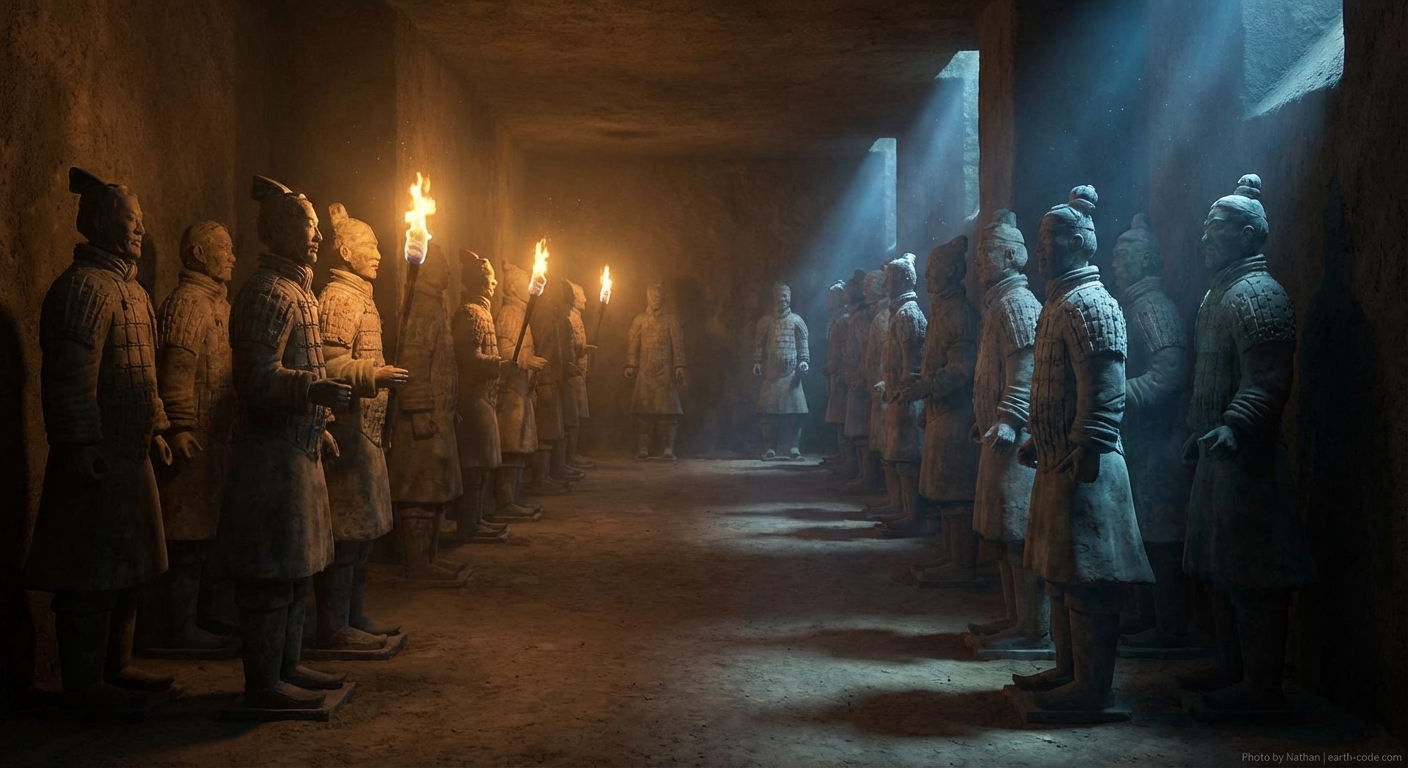
8000 warriors awakened after 2000 years of slumber
The Terracotta Army: 8,000 Silent Guardians and Their Enduring Mysteries
An Underground Marvel Revealed
In March 1974, farmers digging a well near Xi'an, China, made one of the most extraordinary archaeological discoveries of the modern era. What they uncovered would rewrite our understanding of ancient Chinese craftsmanship and imperial power: the Terracotta Army of Emperor Qin Shi Huang, consisting of over 8,000 life-sized clay warriors standing in silent formation for more than 2,200 years.
This vast underground army was constructed between 246-208 BCE to guard China's first emperor in the afterlife. The discovery spans four main pits, with Pit 1 alone covering 14,000 square meters and containing approximately 6,000 figures arranged in military formation.
Technological Marvels in Clay
The scale and sophistication of the Terracotta Army defies ancient technological expectations. Each warrior stands 1.8-1.9 meters tall and weighs approximately 135-300 kilograms. What makes this achievement truly remarkable is the individuality of each figure – no two faces are identical among the thousands discovered.
Archaeological analysis reveals a sophisticated assembly-line production system. Craftsmen created heads, torsos, arms, and legs separately using standardized molds, then assembled and customized each figure. The faces were hand-sculpted with unique features, suggesting the warriors may represent actual soldiers from Qin's army. Eight distinct facial types have been identified, potentially corresponding to different ethnic groups within the empire.
The army includes various military ranks and specializations: infantry soldiers, cavalry units, charioteers, archers, and commanding officers. Higher-ranking figures display more elaborate armor and distinct poses, reflecting the rigid hierarchy of ancient Chinese military structure.
The Enigma of Lost Colors
Perhaps the most intriguing mystery surrounding the Terracotta Army involves its original polychromatic appearance. When first buried, these warriors were painted in brilliant colors – red armor, pink faces, black hair, and purple robes. However, within 15 minutes of exposure to air, the lacquer-based paint begins to curl and flake off, revealing the gray terracotta beneath.
Despite decades of research, archaeologists have struggled to preserve these colors. The painting technology used by ancient Chinese artisans remains partially unexplained. Analysis shows they used a lacquer base mixed with mineral pigments, including cinnabar for red and malachite for green, but the exact binding process that allowed such durability underground continues to puzzle modern scientists.
Recent German-Chinese collaborative efforts have developed new conservation techniques, successfully preserving paint on some newly excavated figures, but the vast majority of the army remains stripped of its original vibrant appearance.
Guardians of Eternal Mysteries
The Terracotta Army represents more than artistic achievement – it embodies Qin Shi Huang's obsession with immortality and his belief in an afterlife requiring earthly protection. The emperor's actual tomb, located 1.5 kilometers away, remains unopened due to concerns about mercury contamination and preservation challenges.
Modern ground-penetrating radar suggests the underground complex may contain additional chambers and artifacts, potentially including the legendary bronze chariots and other treasures mentioned in historical records.
This archaeological wonder continues revealing secrets about ancient Chinese metallurgy, artistic techniques, and imperial ambitions, making it one of humanity's most significant cultural treasures.
[!] Various theories exist. Information may contain errors.