Laschamp Event - The Magnetic Field Reversal 42,000 Years Ago
790 years when Earth's magnetic field suddenly reversed. Lake Suigetsu varves reveal detailed record of pole movement
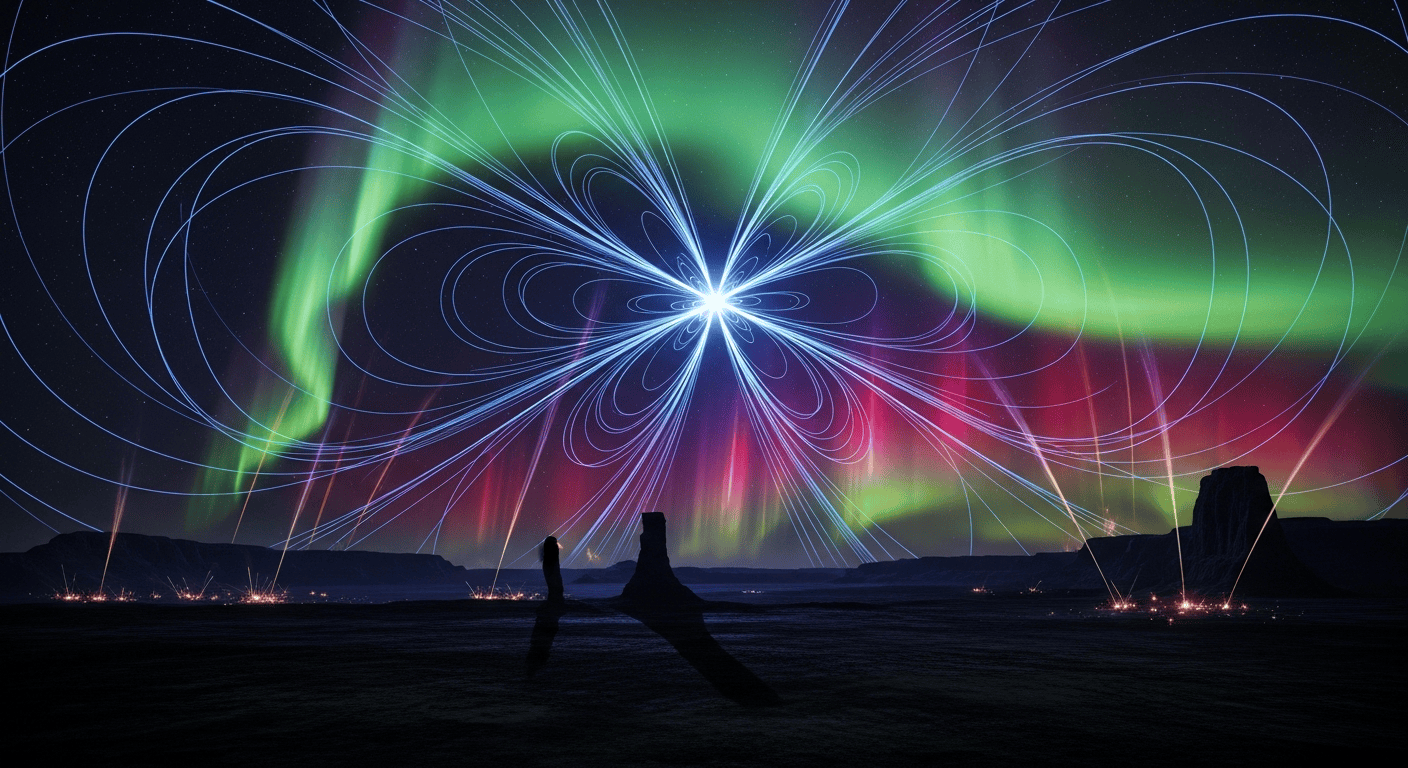
What would happen if Earth's magnetic field reversed today? Records from 42,000 years ago hold the answer
Laschamp Event: Details of the Magnetic Field Reversal 42,000 Years Ago
When Earth's Magnetic Field Flipped
Between approximately 42,200 and 41,500 years ago, something remarkable happened to our planet. Earth's protective magnetic field weakened dramatically, and the north and south magnetic poles temporarily reversed. This "Laschamp Event" is recorded in extraordinary detail in Lake Suigetsu's varves.
New Discoveries from Lake Suigetsu
High-resolution (21-year) paleomagnetic records from Lake Suigetsu sediments have revealed unprecedented details about the Laschamp Event:
- Duration: 790 varve years (approximately 790 years)
- Field strength: Dropped to 5-6% of current levels
- Reversal completion: Took about 240 years
- New discovery: Another magnetic excursion (lasting 550 years) occurred about 2,600 years after Laschamp
Where Did the Magnetic Pole Go?
During the Laschamp Event, the north magnetic pole made a remarkable journey:
1. First moved to near New York
2. Then traveled west to Oregon
3. Finally reached Antarctica (where it stayed for about 400 years)
4. Eventually returned to the Arctic region
During this time, even at full reversal, the magnetic field was only about 28% of its current strength, leaving Earth nearly defenseless against cosmic radiation.
Effects of Cosmic Ray Exposure
The weakened magnetic field caused several phenomena:
1. Increased Cosmic Rays
Cosmic rays normally deflected by Earth's magnetic field reached the surface in large quantities.
2. Increased Radioisotope Production
Interaction between cosmic rays and the atmosphere caused a surge in beryllium-10 and carbon-14 production. Lake Suigetsu varves show a clear peak in carbon-14 concentration during this period.
3. Ozone Layer Depletion
Increased cosmic rays may have damaged the ozone layer, allowing more ultraviolet radiation to reach the surface.
4. Atmospheric Circulation Changes
Magnetic field changes may have affected the atmosphere's electrical properties, potentially altering weather patterns.
Impact on Humanity
The Laschamp Event coincided with the period when modern humans (Homo sapiens) were expanding into Europe. Some researchers suggest that environmental changes during this time may have contributed to the extinction of Neanderthals.
Another hypothesis proposes that increased UV radiation drove humans to seek shelter in caves more frequently, potentially spurring the development of cave paintings.
When Will the Next Reversal Occur?
Earth's magnetic field continues to weaken, having declined by about 10% over the past 150 years. While no one can predict when the next magnetic reversal will occur, Lake Suigetsu's records show that reversals can complete in a relatively short period of decades to centuries.
In modern society, a weakened magnetic field could severely impact power grids and communication satellites. Research on the Laschamp Event provides crucial insights for preparing for future magnetic reversals.
[!] Various theories exist. Information may contain errors.