Jomon Transgression - Varves Record Sea Level Rise 6,000 Years Ago
Major sea level rise during Jomon period. Lake Suigetsu varves precisely record this event
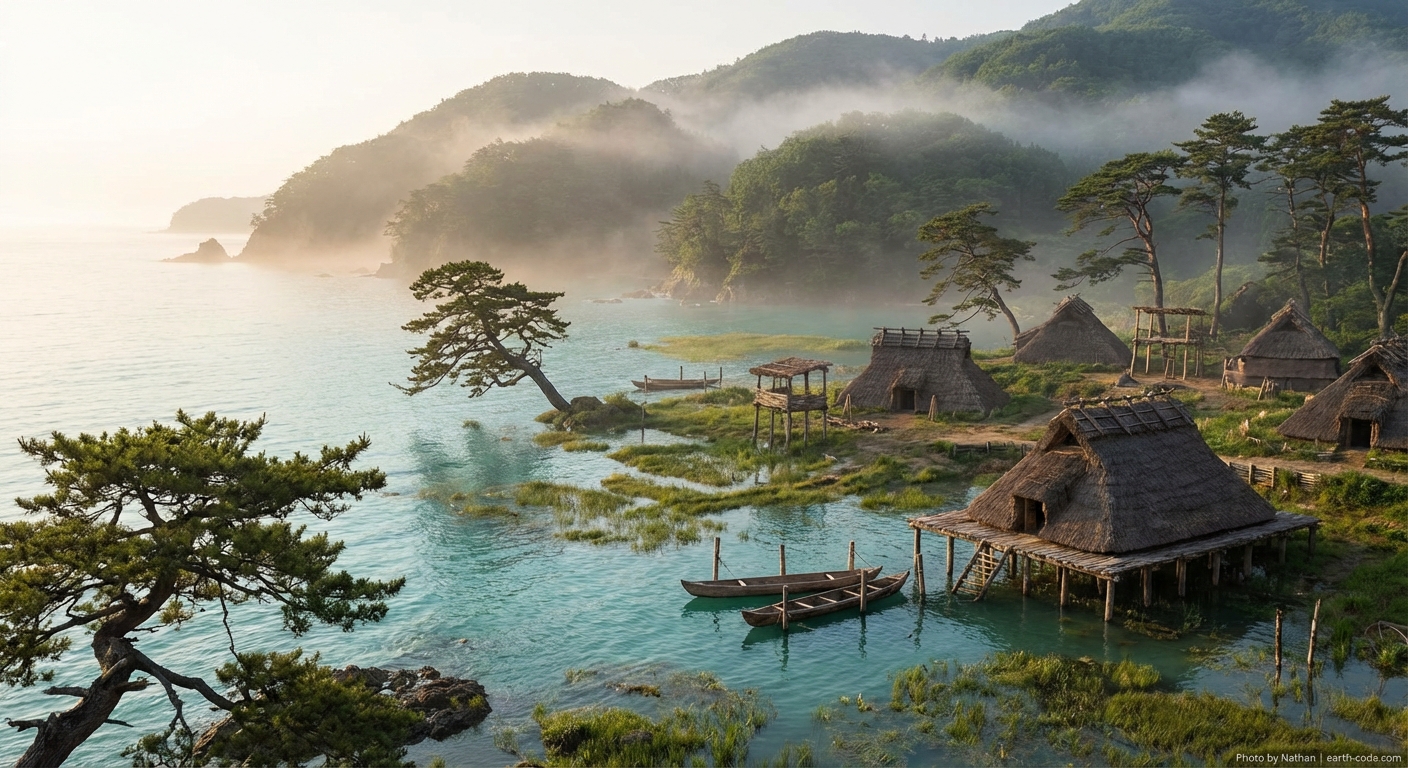
The Jomon Transgression: When Ancient Japan Was Swallowed by Rising Seas
A Prehistoric Deluge Preserved in Lake Sediments
Around 6,000 years ago, the Japanese archipelago experienced one of the most dramatic environmental transformations in its recorded geological history. The Jomon Transgression, named after the prehistoric Jomon culture that witnessed this event, saw sea levels rise 2-3 meters higher than today's levels, fundamentally reshaping the landscape and forcing early inhabitants to adapt or relocate.
The most remarkable aspect of this ancient climate event isn't just its magnitude, but how precisely scientists can study it today. Deep beneath the tranquil waters of Lake Suigetsu in Fukui Prefecture lies one of the world's most complete archives of this prehistoric sea level rise, preserved in delicate annual layers called varves.
Reading Earth's Ancient Diary
Lake Suigetsu's sediment core represents an extraordinary 70,000-year timeline of environmental change, with each thin layer corresponding to a single year. These varves, formed by seasonal variations in sediment deposition, act like tree rings for climate scientists. During the Jomon Transgression, the lake's varves recorded dramatic changes in precipitation patterns, temperature fluctuations, and most importantly, the massive influx of marine-influenced water systems across central Japan.
The transgression reached its peak approximately 6,000 years ago, during what geologists call the Holocene Climate Optimum. At this time, global temperatures were roughly 1-2°C warmer than pre-industrial levels, causing widespread glacial melting and thermal expansion of seawater. The effects were particularly pronounced in Japan due to its complex coastal geography and tectonic setting.
A Drowned Landscape
The scale of inundation was staggering. Much of the Kanto Plain, where modern Tokyo now stands, disappeared beneath the waves. Coastal areas extended far inland, with marine waters reaching depths of over 40 kilometers into what are now densely populated river valleys. Archaeological evidence suggests that settlements dating to 7,000-5,500 years ago are conspicuously absent from these submerged zones, indicating that Jomon communities either migrated to higher ground or adapted their lifestyles to the new aquatic environment.
Interestingly, some researchers propose that this dramatic environmental change may have accelerated cultural development among Jomon peoples. The need to exploit marine resources more intensively potentially drove innovations in fishing technology, boat construction, and coastal settlement patterns that would define Japanese culture for millennia.
Lessons from Ancient Waters
The Jomon Transgression offers sobering parallels to contemporary climate concerns. While the ancient sea level rise occurred over centuries rather than decades, the 3-meter elevation represents a benchmark that modern climate models predict could be reached again if current warming trends continue unchecked.
Lake Suigetsu's varve record continues to provide crucial data for understanding natural climate variability and the complex relationships between temperature, ice sheets, and sea level. These ancient sediments remind us that dramatic environmental change has shaped human societies throughout history, forcing adaptation, migration, and cultural transformation.
[!] Various theories exist. Information may contain errors.