Lake Suigetsu's Warning for the Future - Is the End of Climate Stability Coming?
70,000 years of records reveal climate fragility. Modern civilization exists on an 'exceptional period of stability'
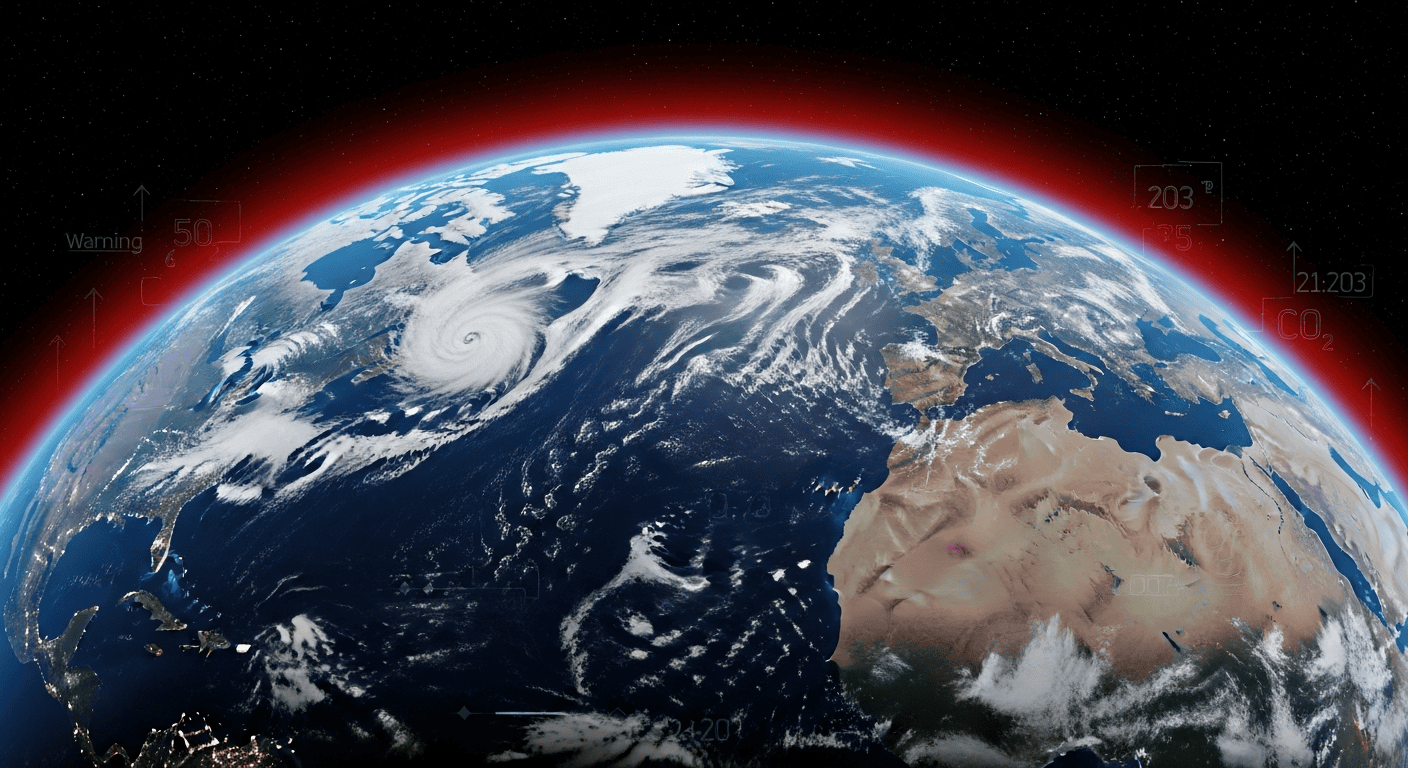
Looking at 70,000 years of climate shows how unusual current stability is. Is its end near?
Lake Suigetsu's Warning for the Future: Is the End of Climate Stability Coming?
Living in an Abnormal Period of Stability
Lake Suigetsu's 70,000-year varve record sends us an important warning: current climate is historically extremely unusual.
Over the past 70,000 years, Earth's climate has fluctuated violently. During D-O Events, temperatures swung 10°C in decades. During the Younger Dryas, an ice age suddenly returned amid warming. During the Laschamp Event, Earth's magnetic field reversed. The Kikai Caldera eruption devastated civilization.
However, since the Holocene began approximately 11,500 years ago, such violent fluctuations have barely occurred. Our civilization exists on this "exceptional period of stability."
Professor Nakagawa's Warning
Professor Takeshi Nakagawa, the leading expert on Lake Suigetsu research, warns:
> "Major floods are occurring frequently around the world now, but looking at varves, we can see the same phenomenon occurred at the end of the ice age."
> "Current global warming is not just rising temperatures - it's in an abnormal mode unlike anything we've experienced before. Civilization exists on climate stability that is more fragile than we imagine."
The Danger of Tipping Points
The most important lesson from Lake Suigetsu's records is that climate systems have "tipping points."
A tipping point is a threshold beyond which a system changes rapidly and irreversibly. Looking at past climate changes, changes often don't occur gradually but suddenly at certain points.
What tipping points might current global warming trigger? Several possibilities have been identified:
1. Thermohaline Circulation Shutdown
The North Atlantic thermohaline circulation (AMOC) is already beginning to weaken. Greenland ice sheet melting is pouring massive freshwater into the North Atlantic.
If AMOC stops, rapid cooling like D-O Events or Younger Dryas could occur in the Northern Hemisphere. This is the "cooling paradox" that can occur during warming.
2. Permafrost Melting
Siberian and Arctic permafrost contains massive amounts of methane and carbon dioxide. If warming releases these, a "feedback loop" accelerating warming would occur.
3. Ice Sheet Collapse
If Greenland or Antarctic ice sheets rapidly collapse, sea level rise could proceed far faster than predicted.
Message from Lake Suigetsu
Lake Suigetsu's varves teach us how precious current stability is by showing how unstable past climate was.
At the same time, they show that stability is not eternal. Climate upheavals that occurred many times in the past can occur again. And human activity might trigger them.
Lake Suigetsu, with its 70,000-year record, continues sending us the message: "Don't take current stability for granted."
[!] Various theories exist. Information may contain errors.