Comparison with World's Varve Lakes - Why Suigetsu is Supreme
Comparing with Germany's Eifel maars, Swedish lakes. Why Lake Suigetsu became the world standard
Lake Suigetsu: The Crown Jewel of the World's Varve Lake Archives
In the scientific quest to understand Earth's climatic past, varve lakes serve as nature's most precise timekeepers. These remarkable bodies of water preserve annual sediment layers like pages in a history book, offering researchers unparalleled glimpses into prehistoric environments. Among the world's most celebrated varve lakes, Japan's Lake Suigetsu has emerged as the undisputed champion, earning its place as the global standard for paleoclimatic research.
The Global Competition
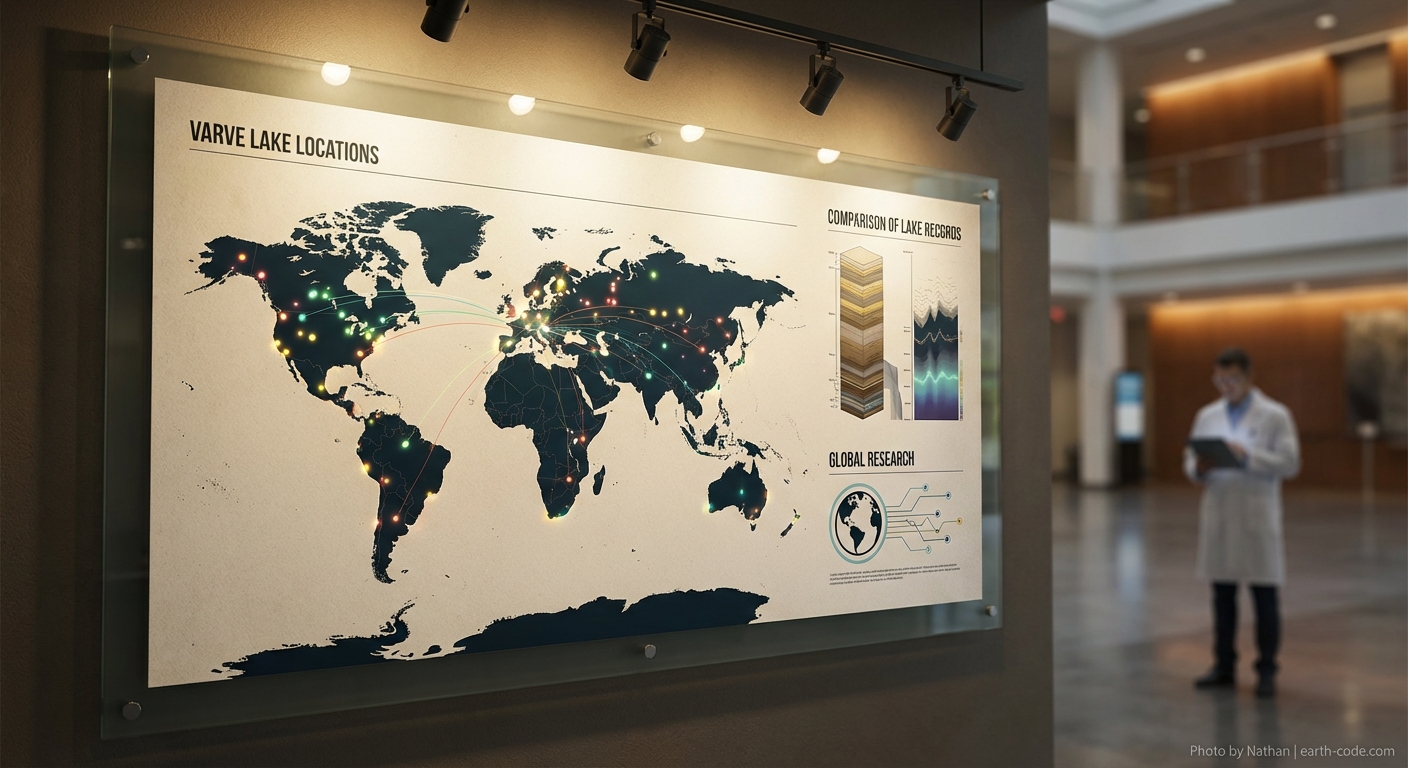
The world's premier varve lakes each tell compelling stories of Earth's past. Germany's Eifel maars—volcanic crater lakes formed by explosive eruptions—have provided exceptional records spanning approximately 60,000 years. These lakes, including the famous Holzmaar and Meerfelder Maar, offer detailed insights into European climate patterns and volcanic activity throughout the late Pleistocene and Holocene periods.
Meanwhile, the Cariaco Basin off Venezuela's coast has contributed crucial marine sediment records, revealing tropical climate fluctuations and oceanic changes over tens of thousands of years. Swedish lakes, particularly in the Scandinavian region, have documented post-glacial environmental changes and provided essential data about ice sheet retreat and forest succession.
Suigetsu's Supremacy
Lake Suigetsu's superiority lies in its extraordinary 70,000-year continuous record—the longest uninterrupted varve sequence discovered to date. Located in Japan's Fukui Prefecture, this ancient lake has maintained stable conditions for millennia, allowing for the preservation of incredibly detailed annual layers that average just 0.7 millimeters thick.
What truly sets Suigetsu apart is the exceptional quality of its sediment preservation. The lake's unique chemistry and consistent oxygen-poor bottom conditions have created an ideal environment for fossilization. Researchers have uncovered perfectly preserved leaf fossils with cellular structures intact, pollen grains showing minute details, and even delicate insect remains that provide unprecedented insights into ancient ecosystems.
The lake's sediments contain over 45,000 distinct varve layers, each representing a single year of deposition. This remarkable preservation allows scientists to correlate specific events—such as volcanic eruptions, climate shifts, and ecological changes—with precise calendar years, creating an accuracy unmatched by other paleoclimatic archives.
Scientific Impact and Global Standards
Lake Suigetsu's exceptional record has revolutionized radiocarbon dating calibration. The International Radiocarbon Community officially adopted Suigetsu's dataset as part of the global calibration curve, making it instrumental in dating archaeological sites and geological events worldwide. This recognition places Suigetsu at the center of chronological research across multiple disciplines.
The lake's influence extends beyond Japan, providing crucial data for understanding global climate patterns, monsoon systems, and the timing of major environmental transitions. Its record has helped scientists correlate Asian climate events with European and North American patterns, contributing to our understanding of global climate connectivity.
Conclusion
While Germany's Eifel maars, Venezuela's Cariaco Basin, and Sweden's glacial lakes each contribute valuable pieces to the paleoclimatic puzzle, Lake Suigetsu stands supreme due to its unparalleled temporal span, exceptional preservation quality, and scientific precision. Its transformation into the world's chronological standard demonstrates how a single natural archive can revolutionize our understanding of Earth's climatic history.
[!] Various theories exist. Information may contain errors.