Aira Caldera Eruption - The Super-Massive Eruption 29,000 Years Ago
Formation of the giant caldera that created Sakurajima. The largest eruption of the last ice age covered the Japanese archipelago
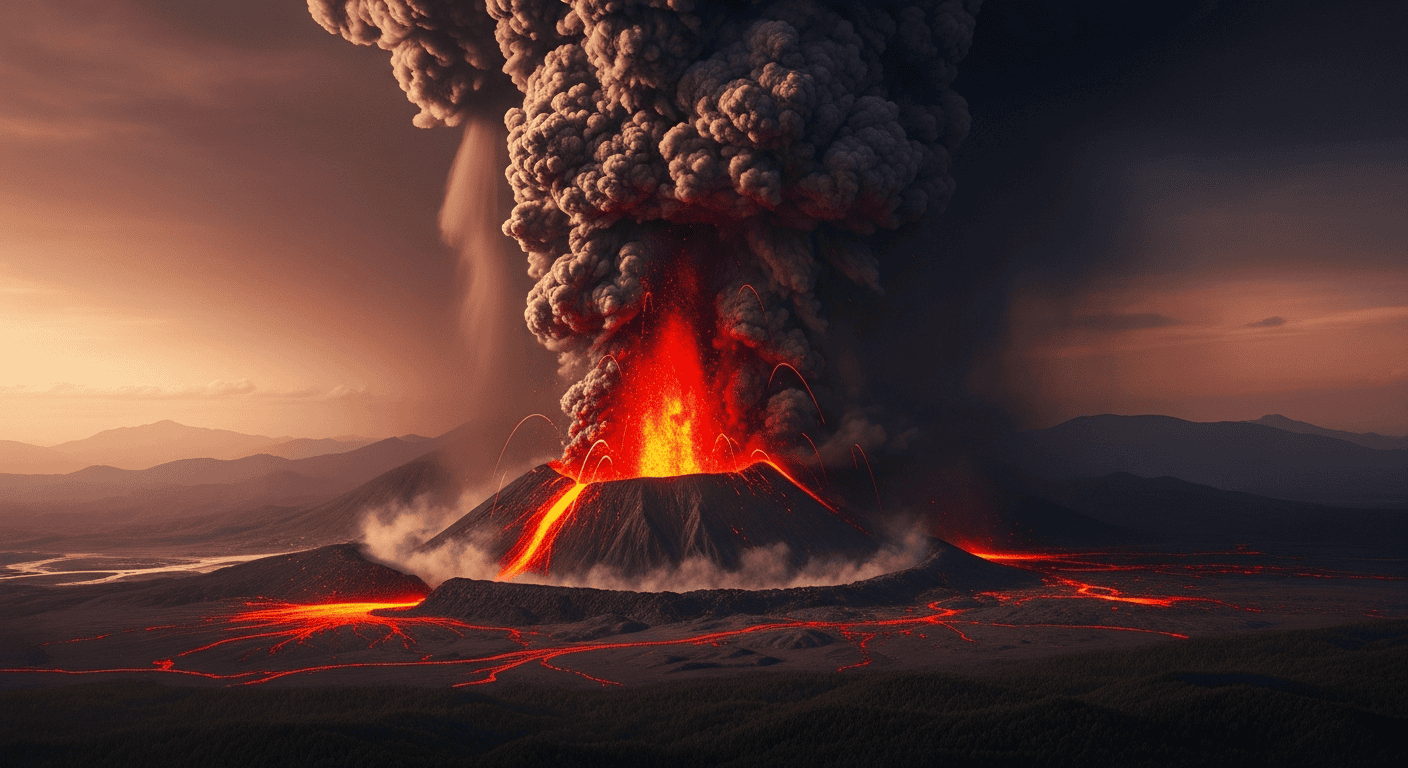
A giant caldera sleeping beneath Sakurajima. How did the eruption 29,000 years ago change the Japanese archipelago?
Aira Caldera Eruption: The Super-Massive Eruption 29,000 Years Ago That Created Sakurajima
The True Nature of Kagoshima Bay
Sakurajima, the symbol of Kagoshima Prefecture, is one of Japan's most active volcanoes. The Kagoshima Bay surrounding it is actually part of a massive caldera formed approximately 29,000 years ago. This depression, called "Aira Caldera," extends about 23 km east-west and 17 km north-south.
The eruption that created this caldera was the largest in Japan during the last ice age and one of the largest in Asia. Evidence of it is recorded in Lake Suigetsu's varves.
Scale of the Eruption
The Aira Caldera eruption's scale is incomparably larger than modern volcanic eruptions:
- Total ejecta: Approximately 450 cubic kilometers
- Pyroclastic flow reach: All of Kyushu, over 100 km
- Ash distribution: Reached as far as Hokkaido
- Eruption duration: Estimated weeks to months
For comparison, the 1815 Tambora eruption (Indonesia), one of history's largest, had ejecta volume of about 160 cubic kilometers. Aira Caldera was approximately 3 times larger.
Aira-Tn Ash (AT)
Volcanic ash from the Aira Caldera eruption, called "Aira-Tn volcanic ash" (AT), is the most important chronological marker (key bed) in Japanese archaeology and geology.
AT ash has been identified across a wide area of the Japanese archipelago, from Kyushu to Kanto, Tohoku, and even southern Hokkaido. Whether archaeological sites or strata lie above or below this ash layer allows rough age estimation.
AT ash layer is confirmed in Lake Suigetsu varves, precisely dating the eruption to approximately 29,000 years ago.
Terror of the Pyroclastic Flows
The Ito pyroclastic flow generated by the eruption devastated southern Kyushu:
- Range: Radius of approximately 100 km
- Deposit thickness: Over 100 m near the crater, tens of cm to several meters at distance
- Temperature: Over 600-700°C
Pyroclastic flows spread at high speed, likely causing massive casualties among Paleolithic people living in Kyushu. Some researchers suggest this eruption influenced human migration patterns in the Japanese archipelago.
Birth of Sakurajima
After Aira Caldera formation, volcanic activity continued at the caldera's southern edge. Sakurajima was born approximately 26,000 years ago and has remained actively erupting to the present day.
Sakurajima is a "post-caldera volcano" of Aira Caldera - a volcano continuing to grow within the giant caldera.
When Will the Next Major Eruption Occur?
Aira Caldera remains active today. Beyond Sakurajima's eruptions, crustal deformation across the entire caldera is being monitored.
Research shows that the ground around Aira Caldera has been rising at approximately 1.3 mm per year over the past several thousand years. This could indicate magma accumulation.
If an eruption comparable to 29,000 years ago occurred, pyroclastic flows would cover all of Kyushu, and ash would reach Honshu and Shikoku. The impact on modern society would be incalculable.
The Aira Caldera eruption record in Lake Suigetsu's varves reminds us that Japan is a "volcanic archipelago."
[!] Various theories exist. Information may contain errors.