Origins of Agriculture and Climate Stability - The Miraculous 10,000 Years That Made Civilization Possible
Why did humans start farming 10,000 years ago? Lake Suigetsu pollen reveals striking correlation with climate stability
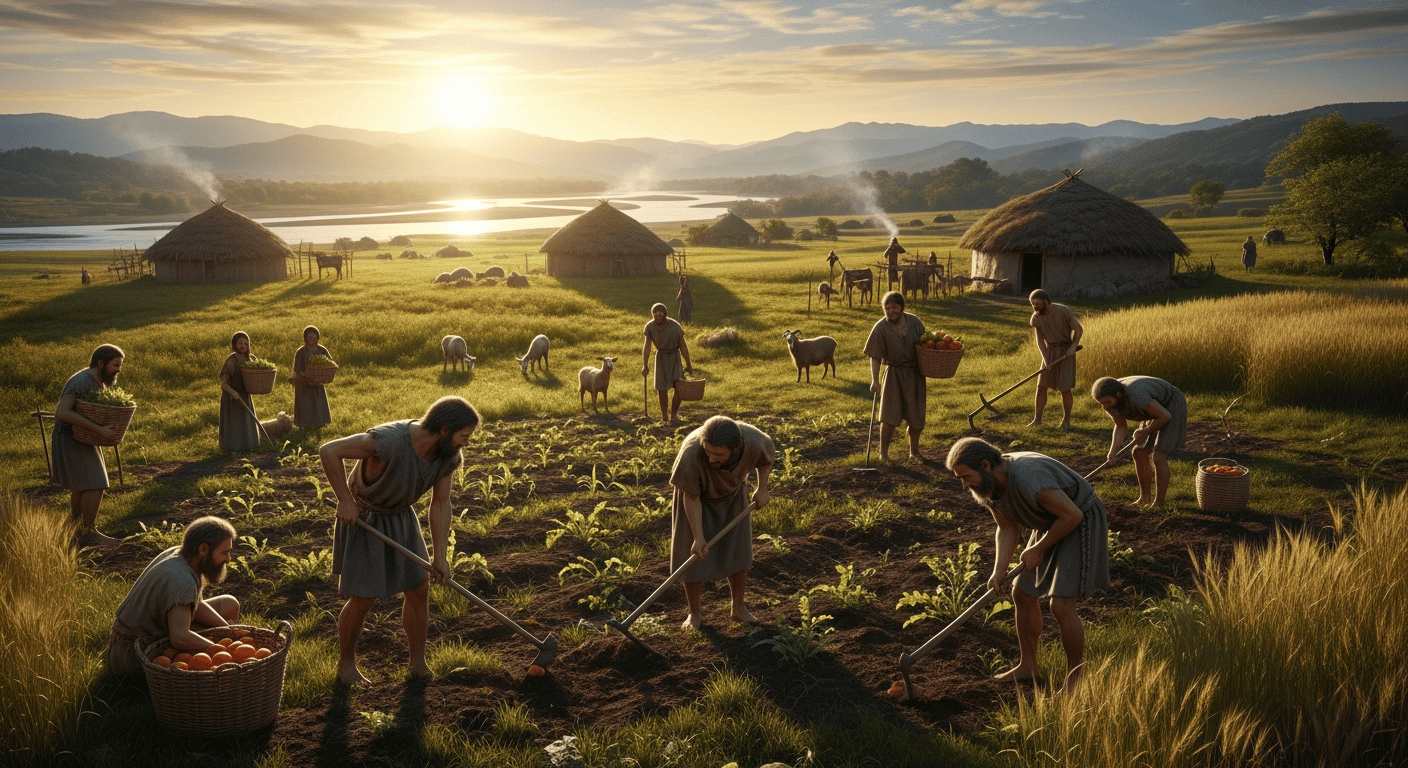
For 70,000 years, humans continued hunting and gathering. Why did they suddenly start farming 10,000 years ago?
Origins of Agriculture and Climate Stability: The Miraculous 10,000 Years That Made Civilization Possible
Why Didn't Humans Farm for 70,000 Years?
Modern humans (Homo sapiens) began leaving Africa and spreading across the world approximately 70,000 years ago. Yet humans only started farming about 10,000 years ago. Why did they continue hunting and gathering for 60,000 years?
Lake Suigetsu varve research provides an answer to this long-standing mystery. The answer lies in "climate stability."
Truth Revealed by Lake Suigetsu Pollen
Professor Takeshi Nakagawa's research team at Ritsumeikan University analyzed pollen fossils in Lake Suigetsu varves, reconstructing climate changes from approximately 16,000 BCE to 8,000 BCE at roughly 10-year resolution.
They found a striking correlation:
1. Periods when plant domestication succeeded = times when climate was warm and stable
2. Periods when settled villages formed = likewise times of stable climate
The start of agriculture wasn't simply because humans "became smarter" - it began because climate reached a state that permitted farming.
Why Climate Stability Is Necessary
Hunting-gathering and farming lifestyles have very different climate requirements:
Hunting-gathering life
- Can move in search of prey and food
- Can flexibly respond to climate changes
- High adaptability to short-term changes
Agricultural life
- Requires months to a year from planting to harvest
- Cannot plan without predictable seasons
- Climate changes cause crop failure leading directly to famine
Professor Nakagawa notes: "In times of unstable climate, farming was not advantageous for survival." Agriculture only becomes a better survival strategy than hunting-gathering when climate is stable.
The Holocene: A Miraculous Stable Period
Approximately 11,500 years ago, the Younger Dryas cold period ended and the "Holocene" - our current era - began.
Holocene climate is the most stable in the past 70,000 years. Rapid warming/cooling cycles like D-O Events virtually ceased.
In this stable climate, humans began farming across the world:
- ~10,000 years ago: Wheat and barley cultivation begins in the Fertile Crescent
- ~9,000 years ago: Rice cultivation begins in China
- ~7,000 years ago: Maize cultivation begins in Mesoamerica
That agriculture began almost simultaneously worldwide is no coincidence - it correlates with when climate began stabilizing.
Civilization's Fragility
Lake Suigetsu's records also contain an important warning for modern civilization.
Our civilization is built upon approximately 10,000 years of "exceptionally stable climate." However, looking at 70,000 years of records, such stability is actually abnormal.
Ongoing global warming could destroy this stability. If warming weakens the North Atlantic thermohaline circulation, rapid climate changes like D-O Events could occur again.
Professor Nakagawa warns: "Civilization exists on climate stability that is more fragile than we imagine." Lake Suigetsu's varves show how unstable past climate was, teaching us how precious our current stability is.
[!] Various theories exist. Information may contain errors.