Sphinx Water Erosion - Built Over 7000 Years Ago?
Geological analysis reveals heavy rainfall erosion on Sphinx. May be thousands of years older than believed
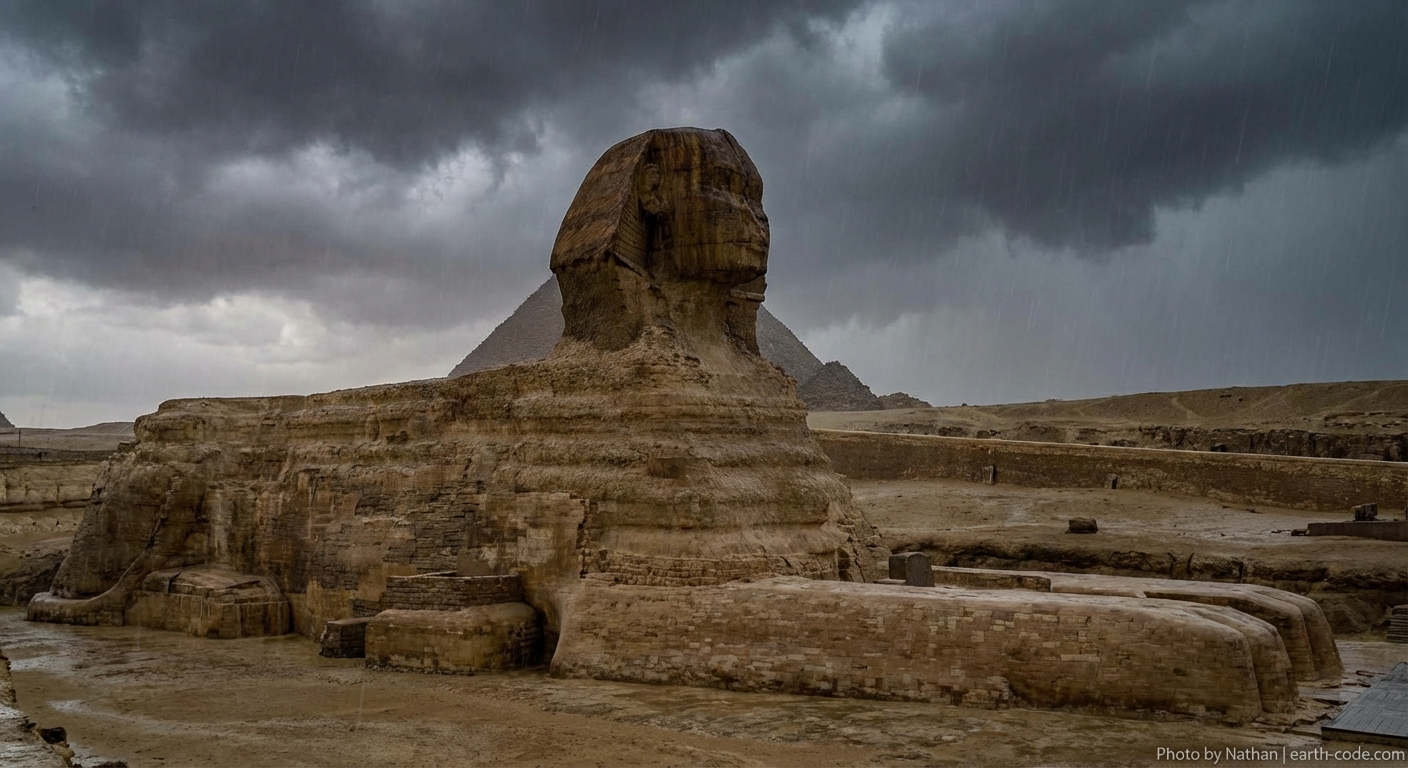
Geological analysis reveals heavy rainfall erosion on Sphinx. May be thousands of years older than believed
The Sphinx Water Erosion Debate: Challenging Egyptian Chronology
The Great Sphinx of Giza has long been considered one of ancient Egypt's most enigmatic monuments, traditionally dated to around 2500 BCE during the reign of Pharaoh Khafre. However, geological evidence suggesting water erosion patterns on the monument has sparked a revolutionary debate that could fundamentally alter our understanding of ancient Egyptian civilization and human history itself.
The Geological Evidence
In the 1990s, geologist Robert Schoch conducted extensive field studies of the Sphinx and its surrounding enclosure, focusing on weathering patterns carved into the limestone bedrock. His analysis revealed distinctive vertical erosion channels and undulating surfaces characteristic of precipitation-induced weathering rather than wind and sand erosion typical of Egypt's current arid climate.
The limestone blocks used in later repairs to the Sphinx show horizontal layering consistent with wind erosion, creating a stark contrast with the vertical weathering patterns on the original monument. This suggests the core structure experienced prolonged exposure to significant rainfall over extended periods. Schoch's geological analysis indicates these weathering patterns would require several thousand years of heavy precipitation to develop, pointing to construction during a much wetter climatic period.
Climatic Context and Dating Implications
Egypt's climate underwent dramatic changes following the last Ice Age. Between approximately 10,000 and 7,000 years ago, the region experienced what scientists call the African Humid Period, characterized by monsoon-like conditions, abundant rainfall, and lush vegetation. This wet phase gradually transitioned to today's desert environment around 5,000 years ago.
If the Sphinx weathering patterns resulted from this ancient wet period, construction would need to predate 7,000 years ago—potentially pushing the monument's origins back to 9,000-12,000 years ago. This timeframe would place the Sphinx's creation during the Pre-Pottery Neolithic period, thousands of years before the emergence of pharaonic Egypt and complex urban civilizations in the region.
Archaeological Resistance and Alternative Theories
The archaeological establishment has largely rejected the water erosion hypothesis, citing several concerns. Critics argue that no evidence exists for the advanced civilization capable of creating such a monument during the proposed earlier period. The sophisticated planning, quarrying techniques, and artistic skill demonstrated by the Sphinx seemingly exceed the technological capabilities attributed to Pre-Pottery Neolithic societies.
Alternative explanations for the weathering patterns include chemical weathering from groundwater, subsurface water flow, or unique geological processes specific to the Giza plateau's limestone composition. Some researchers propose that wind erosion over millennia, combined with occasional flash flooding, could produce similar vertical channeling without requiring a fundamentally different climatic regime.
Implications for Human History
If validated, the water erosion theory would necessitate a complete reassessment of early human civilization. It would suggest that sophisticated architectural and artistic traditions existed millennia before previously recognized, potentially indicating lost chapters of human development. This possibility has captured public imagination while challenging orthodox archaeological timelines.
The debate continues as new technologies enable more precise analysis of weathering patterns, subsurface geology, and ancient climate reconstruction. Regardless of ultimate conclusions, the Sphinx water erosion controversy has stimulated valuable interdisciplinary collaboration between geologists and archaeologists, demonstrating how multiple scientific perspectives can illuminate our understanding of humanity's ancient past. The mystery of the Sphinx endures, continuing to guard secrets that may reshape our conception of civilization's origins.