Sacsayhuaman - Stone Walls So Tight Paper Cannot Fit
Peruvian fortress ruins. Irregular shaped megaliths fit together with astonishing precision
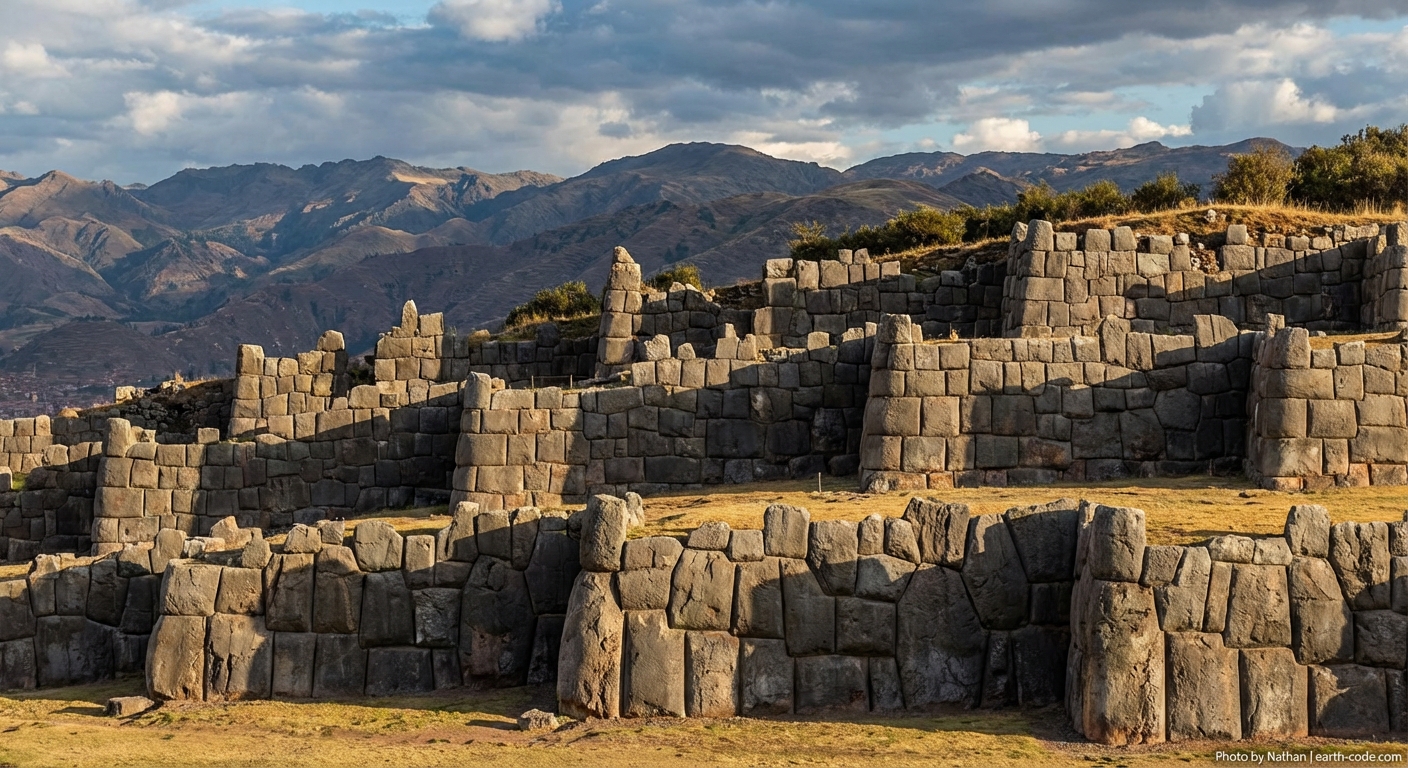
Perfect stonework with no gaps—ancient mystery revealed
The Impossible Fortress: Sacsayhuamán's Mind-Bending Stone Mastery
A Marvel Defying Modern Understanding
Perched high above the ancient Inca capital of Cusco, Peru, lies one of the most bewildering architectural achievements in human history. Sacsayhuamán (pronounced "Sak-say-wah-man") presents visitors with a puzzle that has stumped engineers, archaeologists, and curious travelers for centuries: massive stone blocks weighing up to 200 tons each, fitted together with such incredible precision that not even a knife blade can slip between them.
Built primarily during the reign of Inca Pachacuti around 1438-1471 CE, this fortress complex covers approximately 3,000 hectares and sits at an altitude of 3,701 meters above sea level. The Spanish chronicler Pedro Cieza de León described it in 1553 as a work "that surpasses the buildings of Rome," yet today we're left wondering how the Inca achieved what seems impossible even with modern machinery.
Engineering That Defies Logic
The most spectacular feature of Sacsayhuamán is its zigzag defensive walls, constructed from three tiers of megalithic limestone blocks. These aren't uniform rectangular stones—each block is uniquely shaped, some with as many as 12 angles, creating an intricate three-dimensional jigsaw puzzle. The largest stone, nicknamed the "tired stone" by locals, measures approximately 8.5 meters high and weighs an estimated 140 tons.
What makes this achievement even more remarkable is the complete absence of mortar. The blocks rely entirely on their precise fit and gravitational force to maintain structural integrity. Modern laser measurements have confirmed that gaps between stones are often less than 0.02 millimeters—thinner than most paper. This precision has helped the walls survive numerous devastating earthquakes that leveled Spanish colonial buildings in Cusco, including major tremors in 1650 and 1950.
The engineering challenges multiply when considering transportation. The nearest quarries lie 15-20 kilometers away, and some theories suggest certain stones originated from sites up to 35 kilometers distant. How did the Inca move these massive blocks across mountainous terrain without wheels, pulleys, or large domesticated animals?
Theories and Mysteries
Several hypotheses attempt to explain Sacsayhuamán's construction. Traditional archaeological theories propose the use of bronze tools, wooden rollers, rope systems, and thousands of workers organized through the Inca mit'a labor system. Computer models suggest that coordinated teams of 2,400 people could theoretically move the largest stones using ramps and lever systems.
However, alternative researchers have proposed more controversial explanations. Some suggest the Inca possessed advanced stone-softening techniques, possibly using plant-based acids to temporarily soften rock surfaces. Others point to acoustic levitation theories or lost ancient technologies, though these lack archaeological evidence.
Recent studies using ground-penetrating radar have revealed that the precision extends deep underground, with foundation stones showing the same impossible tolerances as visible surfaces. This discovery has only deepened the mystery, as it suggests the builders achieved this precision throughout the entire structure, not just at the surface level.
A Legacy Written in Stone
Sacsayhuamán stands as testament to the Inca Empire's sophisticated understanding of engineering, astronomy, and architecture. The fortress served not only defensive purposes but also functioned as a ceremonial center and astronomical observatory. Its three walls are thought to represent the teeth of the sacred puma that formed Cusco's urban layout.
Today, this UNESCO World Heritage Site continues to challenge our assumptions about ancient capabilities, reminding us that human ingenuity often transcends the limitations we imagine.
[!] Various theories exist. Information may contain errors.