Puma Punku - Precision Impossible to Replicate
Astonishing stonework at Bolivian ruins. H-block precision difficult even with modern technology
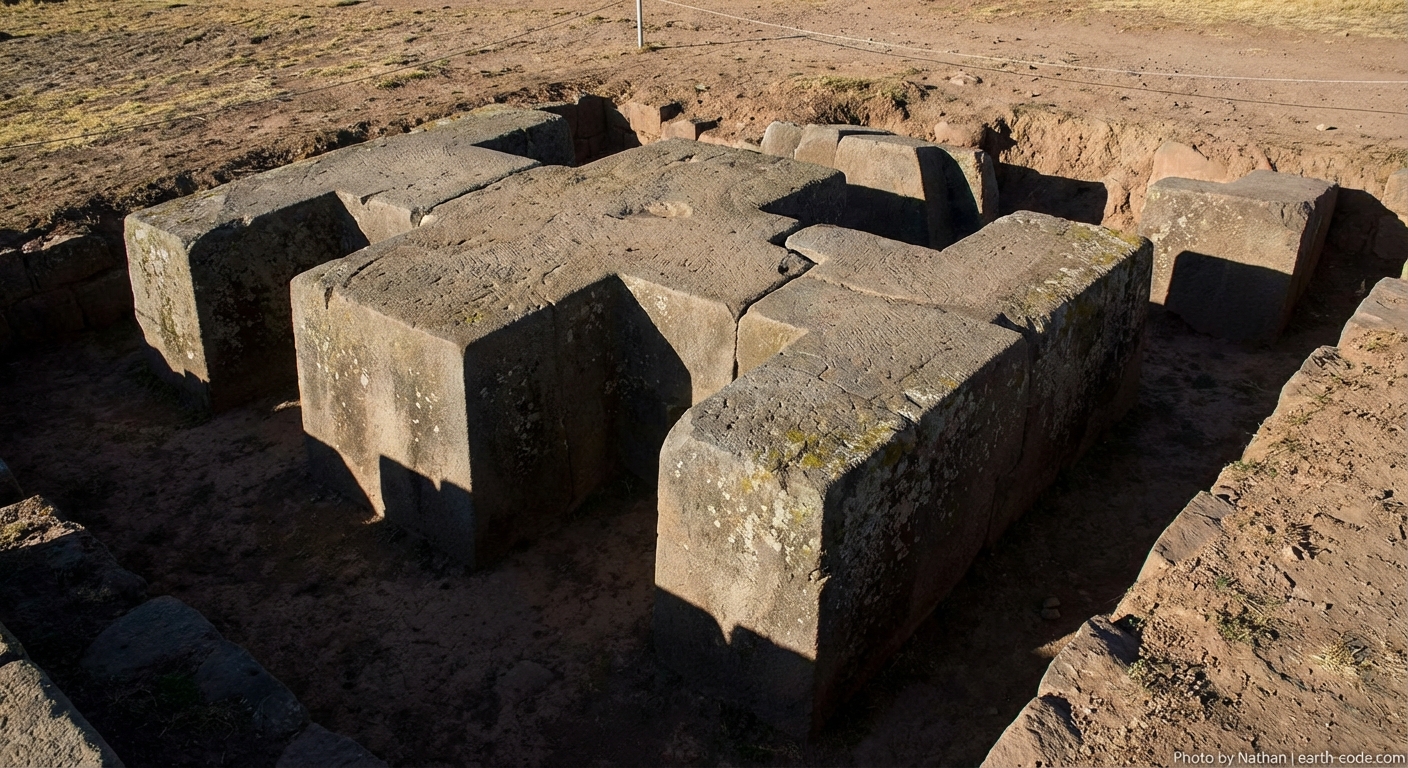
Astonishing stonework at Bolivian ruins. H-block precision difficult even with modern technology
Puma Punku: Ancient Precision That Challenges Modern Engineering
Deep in the Bolivian highlands, approximately 12 miles from La Paz, lies one of archaeology's most perplexing sites: Puma Punku. This ancient complex, part of the larger Tiwanaku (Tiahuanaco) archaeological site, continues to baffle researchers and engineers with its extraordinary precision stonework that seems to defy conventional understanding of pre-Columbian capabilities.
The Marvel of H-Blocks and Megalithic Masonry
The most striking features of Puma Punku are its precisely cut stone blocks, particularly the famous H-shaped blocks that have become synonymous with the site's mysterious craftsmanship. These massive andesite and red sandstone blocks, some weighing over 130 tons, display a level of precision that rivals modern machining capabilities. The surfaces are so flat and smooth that they appear almost polished, with joints so tight that not even a razor blade can fit between them.
What makes these blocks truly remarkable is their complex interlocking design. The H-blocks feature intricate grooves, channels, and connecting points that fit together like massive three-dimensional puzzle pieces. Each block required not only precise cutting but also careful planning to ensure perfect alignment with adjacent stones—a feat that speaks to sophisticated engineering knowledge and advanced construction techniques.
Technical Challenges That Perplex Modern Engineers
Contemporary attempts to replicate Puma Punku's stonework have revealed just how extraordinary these ancient achievements were. The precision of the cuts, particularly the perfectly straight edges and right angles, would be challenging to achieve even with modern diamond-tipped tools and laser-guided equipment. The ancient builders somehow managed to create surfaces accurate to within fractions of a millimeter across spans of several meters.
The logistics alone present staggering challenges. The massive blocks were quarried from sites miles away and transported across difficult terrain at an altitude of over 12,000 feet. The red sandstone came from a quarry approximately 10 kilometers away, while some of the largest blocks originated from quarries up to 90 kilometers distant. Moving these megalithic stones would require sophisticated knowledge of leverage, transportation, and coordination—capabilities that seem incongruous with our understanding of pre-Columbian technology.
Archaeological Context and Dating Mysteries
Puma Punku is traditionally dated to around 536-600 CE, during the height of the Tiwanaku civilization. However, the site's construction techniques and precision work seem remarkably advanced for this period, leading to ongoing debates about its true age and the technological capabilities of its builders.
The complex appears to have been a ceremonial center, possibly featuring a stepped pyramid or temple structure. However, much of the original configuration remains unclear, as the site was heavily damaged by Spanish colonial activities and later stone removal for construction projects in La Paz.
Enduring Questions and Modern Implications
Puma Punku continues to challenge our assumptions about ancient technological capabilities. While some theories venture into speculative territory, the site undeniably demonstrates that pre-Columbian civilizations possessed sophisticated engineering knowledge and construction techniques that we're still working to understand fully.
The precision stonework at Puma Punku serves as a humbling reminder that ancient peoples were capable of remarkable achievements, pushing us to reconsider the linear progression of technological development and appreciate the ingenuity of past civilizations.