Olmec Colossal Heads - African Features?
Giant stone heads found in Mexico. Why do they have African features?
The Mystery of the Olmec Colossal Heads: Ancient African Connections or Cultural Misinterpretation?
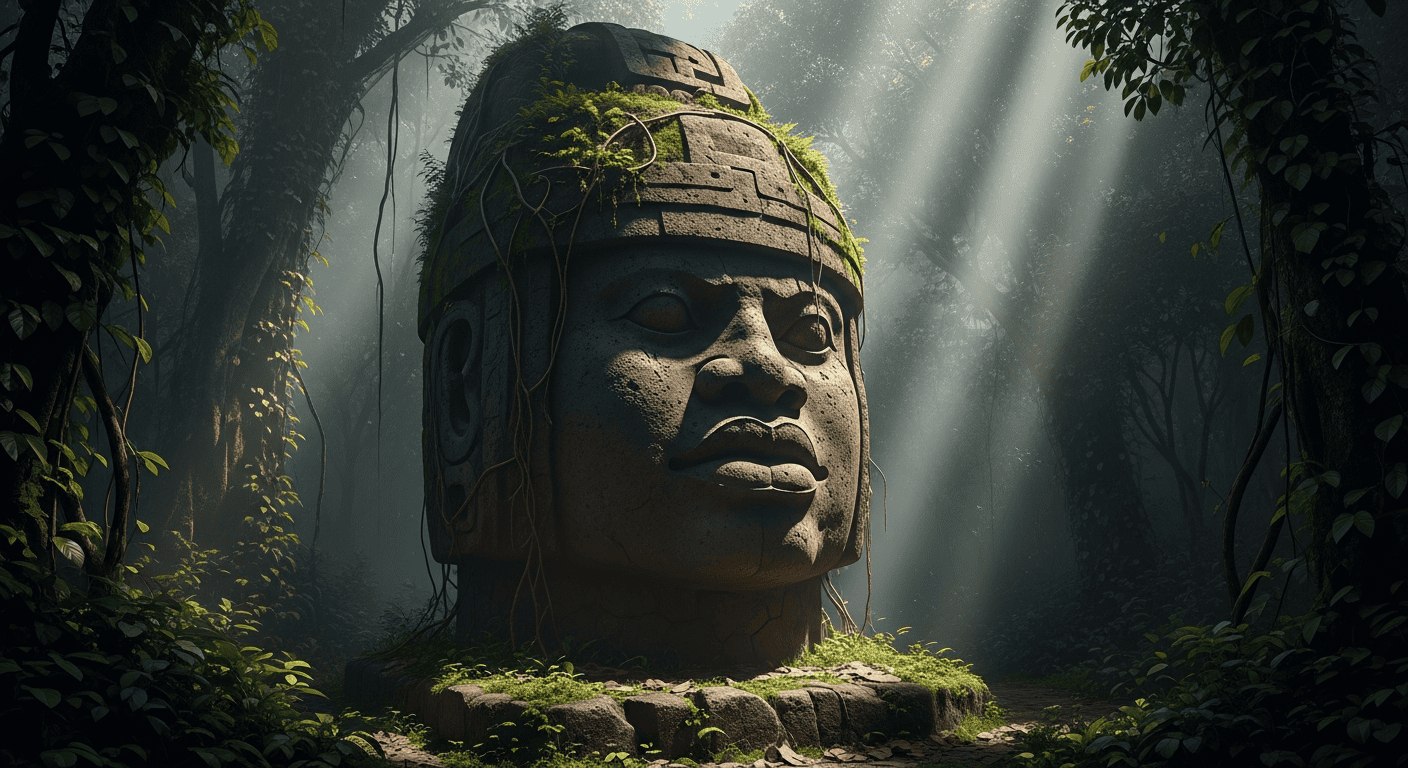
Deep in the tropical lowlands of Mexico's Gulf Coast, 17 massive stone heads emerge from the earth like silent sentinels of a forgotten civilization. These monumental sculptures, carved by the ancient Olmec people between 1500 and 400 BCE, have sparked one of archaeology's most contentious debates: Do their distinctive facial features suggest ancient contact between Africa and the Americas?
Monuments of Extraordinary Scale
The Olmec colossal heads are engineering marvels that continue to astound researchers. The largest specimens tower at nearly 10 feet tall and weigh up to 50 tons—equivalent to about 10 African elephants. Carved from single blocks of basalt, these monuments were transported across distances of up to 100 kilometers from their quarry sites in the Tuxtla Mountains to ceremonial centers like La Venta, San Lorenzo, and Tres Zapotes.
Each head displays unique facial characteristics, suggesting they represent individual rulers or important figures. The sculptures feature broad noses, full lips, and pronounced cheekbones—traits that some researchers argue bear striking resemblances to African physiognomy. This observation has fueled decades of speculation about possible trans-Atlantic contact millennia before Columbus.
The African Connection Theory
Proponents of the African contact theory, notably Ivan Van Sertima in his controversial 1976 work "They Came Before Columbus," argue that these features are too distinct to be coincidental. They point to the Olmec's sophisticated knowledge of astronomy, their complex calendar systems, and their advanced sculptural techniques as potential evidence of outside influence.
Some researchers have noted similarities between Olmec art and certain African cultural elements, including the use of jade, specific hairstyles depicted in smaller sculptures, and certain religious iconography. The Nok culture of Nigeria, which flourished around the same period (1000 BCE - 300 CE), produced terracotta sculptures with comparable artistic sophistication.
Archaeological Skepticism
However, mainstream archaeology remains skeptical of these claims. Dr. Richard Diehl, a leading Olmec scholar, emphasizes that the facial features can be explained by the indigenous population's natural diversity. Modern genetic studies suggest that Native American populations, particularly in tropical regions, display considerable phenotypic variation that could account for the heads' distinctive characteristics.
Archaeological evidence shows clear cultural continuity between the Olmec and earlier Mesoamerican peoples, with no traces of African material culture, technologies, or biological markers in the archaeological record. The Olmec's achievements in sculpture, astronomy, and urban planning developed organically from earlier Mesoamerican traditions.
A Cultural Legacy
Regardless of their origins, these colossal heads represent one of humanity's earliest monumental portrait traditions. They demonstrate the Olmec civilization's remarkable artistic and engineering capabilities, establishing them as Mesoamerica's "mother culture" that would influence later civilizations including the Maya and Aztec.
The debate surrounding these mysterious sculptures reflects broader questions about ancient human migration, cultural exchange, and the interpretation of archaeological evidence. While the African connection remains unproven, the heads continue to captivate researchers and visitors alike, standing as testament to the ingenuity of ancient American civilizations.
[!] Various theories exist. Information may contain errors.