Nan Madol - Venice of the Pacific
92 artificial islands on a remote Micronesian island. Exploring the mystery of megalithic civilization
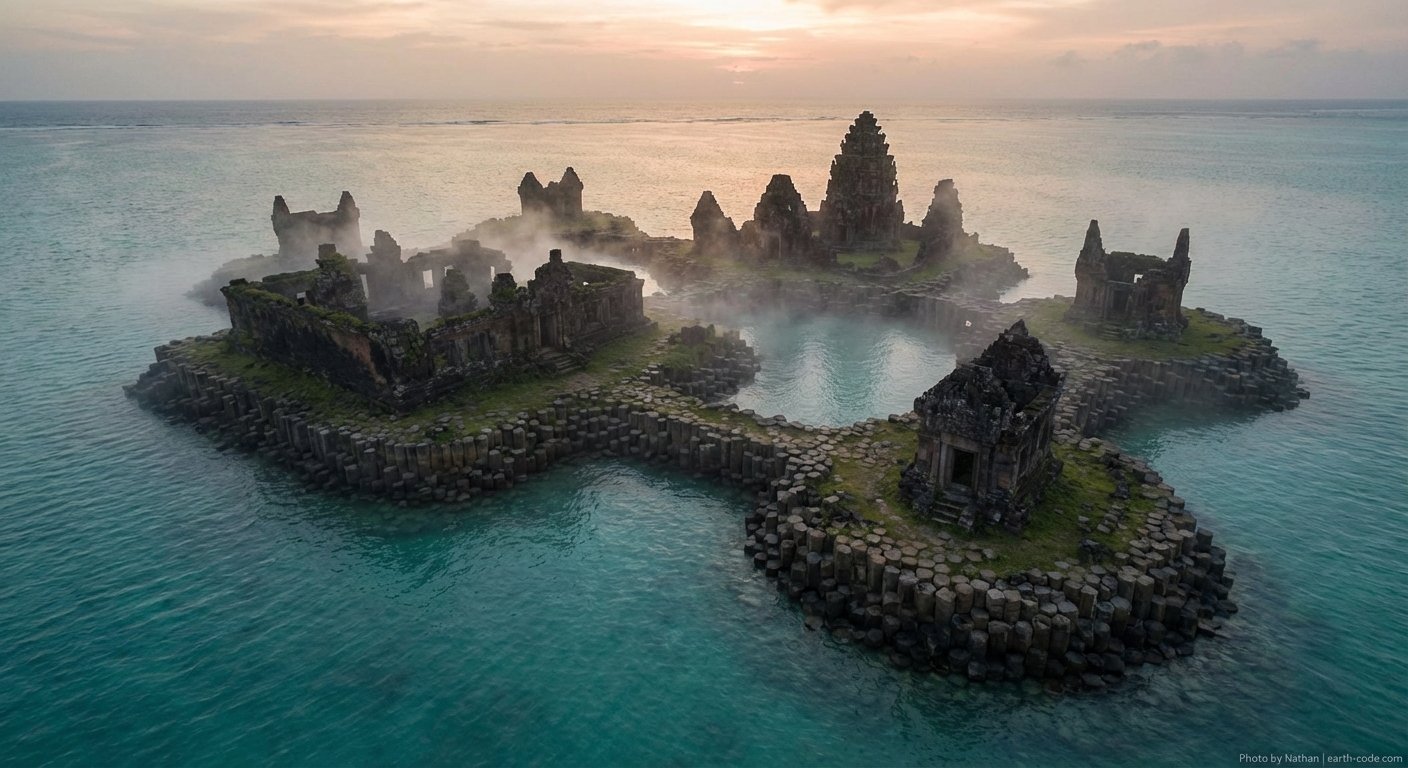
Nan Madol: The Mysterious Venice of the Pacific
Deep in the waters surrounding Pohnpei, a remote island in Micronesia, lies one of archaeology's most enigmatic puzzles. Nan Madol, often called the "Venice of the Pacific," consists of 92 artificial islands connected by an intricate network of canals, all constructed from massive basalt blocks without the aid of wheels, pulleys, or large animals.
The Megalithic Marvel
Built between 1200-1500 CE by the Saudeleur dynasty, Nan Madol represents an extraordinary feat of ancient engineering. The site covers approximately 200 acres of shallow reef flats and lagoons on the southeastern shore of Pohnpei. What makes this achievement truly remarkable is the sheer scale of construction: archaeologists estimate that over 750,000 tons of basalt were quarried, transported, and precisely fitted to create these artificial islands.
The basalt blocks, some weighing up to 50 tons each, were somehow transported from quarries located miles away across the island. Without wheels, pulleys, or beasts of burden—none of which existed in ancient Micronesia—the Saudeleur people accomplished what seems impossible by modern standards. Each island served specific purposes: residential areas for the ruling elite, ceremonial centers, burial grounds, and administrative complexes.
Theories and Mysteries
How did they move such massive stones? Several theories attempt to explain this engineering marvel. Some archaeologists propose that the builders used large rafts made from local materials, floating the stones during high tide through natural and artificial channels. Others suggest a sophisticated system of wooden rollers and ramps, though no evidence of such tools has been discovered.
Local Pohnpeian legends offer their own explanation, claiming the stones were "flown through the air" by two powerful sorcerer brothers, Olisihpa and Olosohpa, who founded the Saudeleur dynasty. While archaeologists seek more conventional explanations, the precision of the stonework—with blocks fitted so tightly that no mortar was needed—continues to baffle experts.
Recent archaeological surveys using LIDAR technology have revealed that Nan Madol's construction was even more complex than previously understood. The artificial islands rest on carefully engineered foundations that extend deep beneath the water's surface, suggesting advanced knowledge of marine construction techniques.
The Fall of an Empire
The Saudeleur dynasty ruled from Nan Madol for approximately 500 years until around 1628 CE, when they were overthrown by a warrior named Isokelekel from the island of Kosrae. According to oral traditions, the Saudeleur had become increasingly oppressive, demanding tribute and labor from across Pohnpei.
Today, Nan Madol stands largely abandoned, slowly being reclaimed by tropical vegetation and rising sea levels. The site was designated a UNESCO World Heritage Site in 2016, recognizing both its outstanding universal value and its vulnerable status due to climate change.
Enduring Questions
Despite decades of archaeological investigation, fundamental questions remain unanswered. The absence of a written record from the Saudeleur period means researchers must rely on oral histories, archaeological evidence, and educated speculation to understand this remarkable civilization's achievements and ultimate decline.
[!] Various theories exist. Information may contain errors.