Mohenjo-Daro Nuclear War Evidence?
Melted stones and radiation traces in 4000-year-old Indus city? Truth behind ancient nuclear war theory
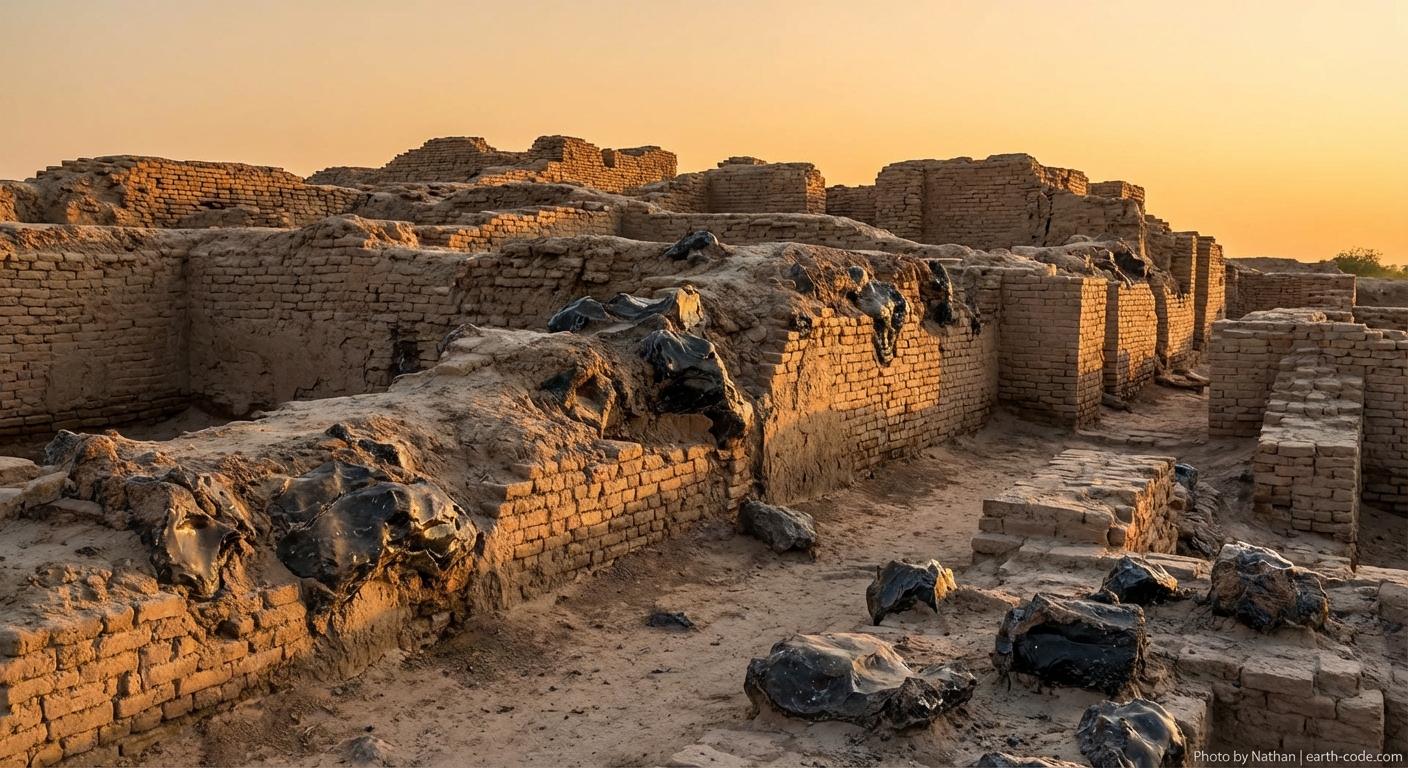
Nuclear blast traces in 4000-year-old ruins? Unraveling ancient civilization's greatest mystery
The Radioactive Ruins of Mohenjo-Daro: Ancient Nuclear War or Natural Disaster?
When Science Fiction Meets Archaeology
In the vast archaeological landscape of Pakistan's Sindh province lies Mohenjo-Daro, one of humanity's earliest urban centers. Dating back to approximately 2600-1900 BCE, this jewel of the Indus Valley Civilization has captivated researchers for nearly a century. However, beyond its impressive urban planning and sophisticated drainage systems, Mohenjo-Daro harbors one of archaeology's most controversial mysteries: evidence that some claim points to an ancient nuclear catastrophe.
The Curious Case of Vitrified Stones
The intrigue began in the 1920s when British archaeologist Sir John Marshall first excavated the site. What puzzled researchers were the scattered "black stones" found throughout the ruins—chunks of clay and sand that appeared to have been melted and fused together at extremely high temperatures, estimated between 1,400-1,500°C (2,550-2,730°F). These vitrified materials, found in a 50-yard radius in the city center, seemed inconsistent with typical Bronze Age technology.
Adding fuel to the mystery, some researchers in the 1970s claimed to have detected elevated radiation levels in the area, though these findings remain disputed. The skeleton distribution also raised eyebrows—44 scattered skeletons were discovered lying in streets and buildings, seemingly caught mid-activity, with some showing signs of sudden death.
The Nuclear Theory Takes Flight
David Davenport, a British researcher, along with Italian journalist Ettore Vincenti, proposed in 1979 that Mohenjo-Daro was destroyed by an ancient nuclear explosion. They suggested the vitrified stones were created by intense heat similar to that found at Hiroshima and Nagasaki. Their theory gained traction when they claimed the blast pattern resembled modern atomic explosions, with destruction radiating outward from an epicenter.
The ancient Sanskrit epics, particularly the Mahabharata, seemed to support their claims with descriptions of devastating weapons called "Brahmastras"—divine weapons that could level entire cities with blinding light and intense heat, leaving the land barren for generations.
Scientific Skepticism and Alternative Explanations
However, mainstream archaeology remains unconvinced. Dr. Kenoyer from the University of Wisconsin and other Indus Valley experts argue that the evidence has more mundane explanations. The vitrified stones could result from:
- Large-scale fires that swept through the mud-brick city
- Pottery kilns operating at high temperatures
- Natural conflagrations involving organic materials and strong winds
- Volcanic activity or meteor impacts, though no crater evidence exists
Modern radiation readings in the area show normal background levels, contradicting earlier claims of contamination. The scattered skeletons, rather than indicating instantaneous death, likely represent different time periods of occupation and abandonment.
The Verdict Remains Elusive
While the nuclear war theory captures imagination, the archaeological consensus leans toward conventional explanations. The Indus Valley Civilization's decline around 1900 BCE more likely resulted from climate change, shifting river patterns, or economic collapse rather than atomic warfare.
Yet Mohenjo-Daro's mysteries persist, reminding us that our ancient past still holds secrets waiting to be unlocked through careful scientific investigation.
[!] Various theories exist. Information may contain errors.