True Purpose of Machu Picchu - Observatory vs Royal Retreat
Purpose of sky city still unknown. Solar observatory or Inca king hideaway?
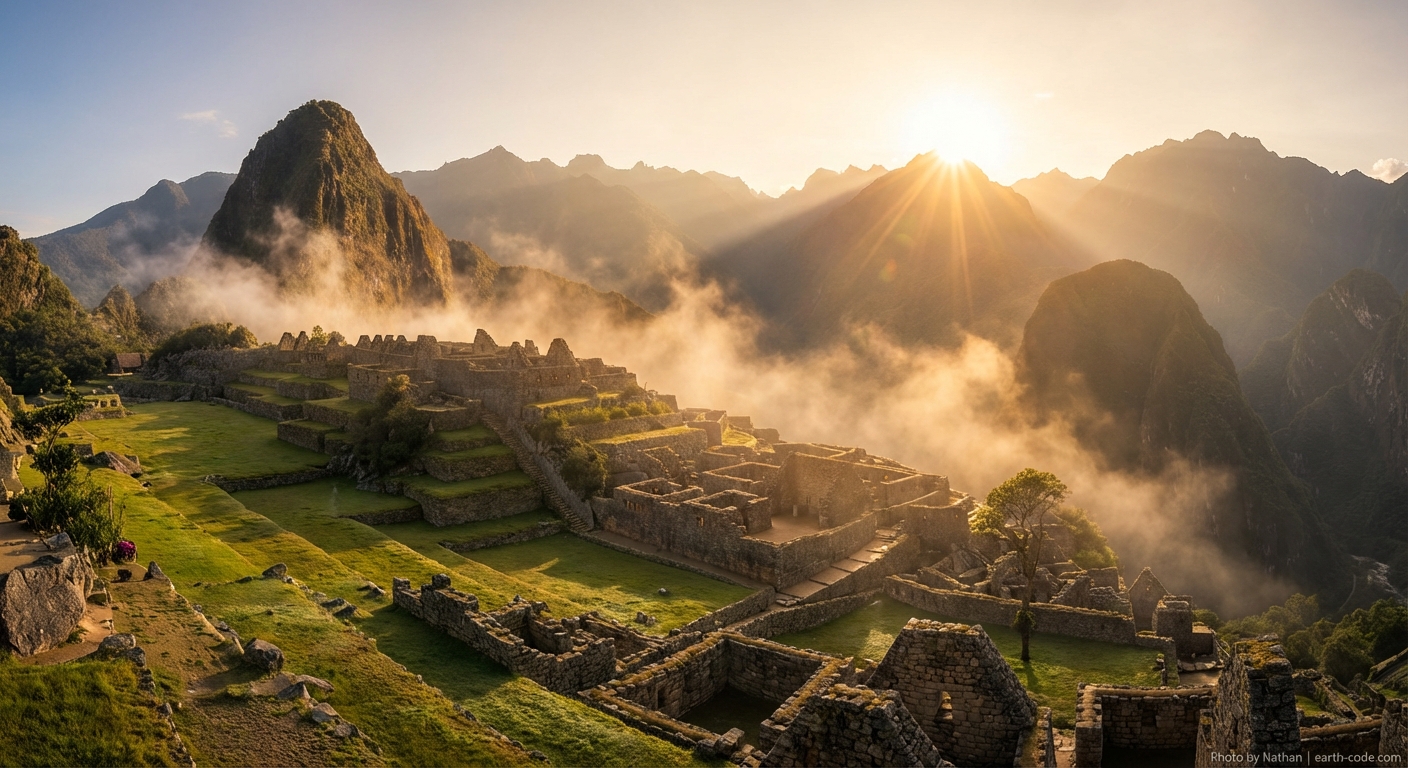
Why was this mysterious city built in the sky?
The Enigma of Machu Picchu: Celestial Observatory or Royal Sanctuary?
Perched dramatically at 2,430 meters above sea level on a narrow ridge in Peru's Eastern Cordillera, Machu Picchu continues to mystify archaeologists nearly a century after Hiram Bingham's famous "rediscovery" in 1911. This remarkably preserved Inca citadel, built around 1450 CE during the reign of Pachacuti Inca Yupanqui, raises a fundamental question that has divided scholars for decades: Was this "Lost City of the Incas" primarily a sophisticated astronomical observatory or an exclusive royal retreat?
The Case for a Celestial Observatory
Archaeological evidence strongly supports Machu Picchu's astronomical significance. The site contains numerous structures with precise celestial alignments that would have allowed Inca astronomers to track solar and lunar cycles with remarkable accuracy. The Intihuatana stone, a carved granite pillar at the citadel's highest point, functions as a sophisticated sundial that casts shadows indicating the sun's position throughout the year.
During the winter solstice on June 21st, the sun sits directly above the Intihuatana, casting no shadow—a phenomenon that occurs at only this latitude. The Temple of the Sun features a curved wall with a window perfectly aligned to frame the sunrise during the June solstice, while the Room of the Three Windows aligns with the constellation we know as the Southern Cross.
Archaeoastronomer Giulio Magli has identified over 20 astronomical alignments throughout the complex, suggesting that Machu Picchu served as a massive three-dimensional calendar. The Inca, who called themselves "children of the sun," needed precise astronomical observations for their agricultural calendar, determining optimal planting and harvesting times across their vast empire.
The Royal Retreat Theory
However, compelling evidence also supports Machu Picchu's role as an exclusive royal estate. The site's 200 structures housed an estimated 750 people at its peak—a relatively small population suggesting exclusivity rather than a major administrative or religious center. The quality of construction, featuring perfectly fitted granite blocks weighing up to 50 tons, demonstrates the enormous resources invested in what may have been Pachacuti's personal retreat.
The presence of luxury amenities—including sophisticated water management systems with 16 fountains, terraced gardens, and elaborate residential quarters—indicates the site's residential rather than purely ceremonial function. Spanish chronicler Pedro Cieza de León described similar Inca royal estates where emperors retreated with their courts during certain seasons.
Archaeological analysis of burials at the site reveals a population consisting primarily of women and priests, suggesting it may have served as a sacred retreat where selected individuals maintained religious ceremonies away from the empire's political centers.
A Synthesis of Purpose
Modern archaeological consensus increasingly suggests that Machu Picchu served multiple interconnected purposes. The site likely functioned as both a royal estate and ceremonial center where astronomical observations guided religious practices and agricultural planning. This dual purpose reflects the Inca worldview, where practical astronomy and spiritual beliefs were inseparable aspects of imperial administration.
The citadel's abandonment around 1572, during Spanish colonial consolidation, ended its active use before European chroniclers could document its true purpose. Today, this remarkable site continues revealing its secrets through ongoing archaeological investigation, remote sensing technology, and interdisciplinary research combining astronomy, archaeology, and Inca historical records.
[!] Various theories exist. Information may contain errors.