Lake Vostok - Life in Antarctica's Subglacial Lake
Giant lake beneath 4km of ice. Discovery of ecosystem isolated for 15 million years
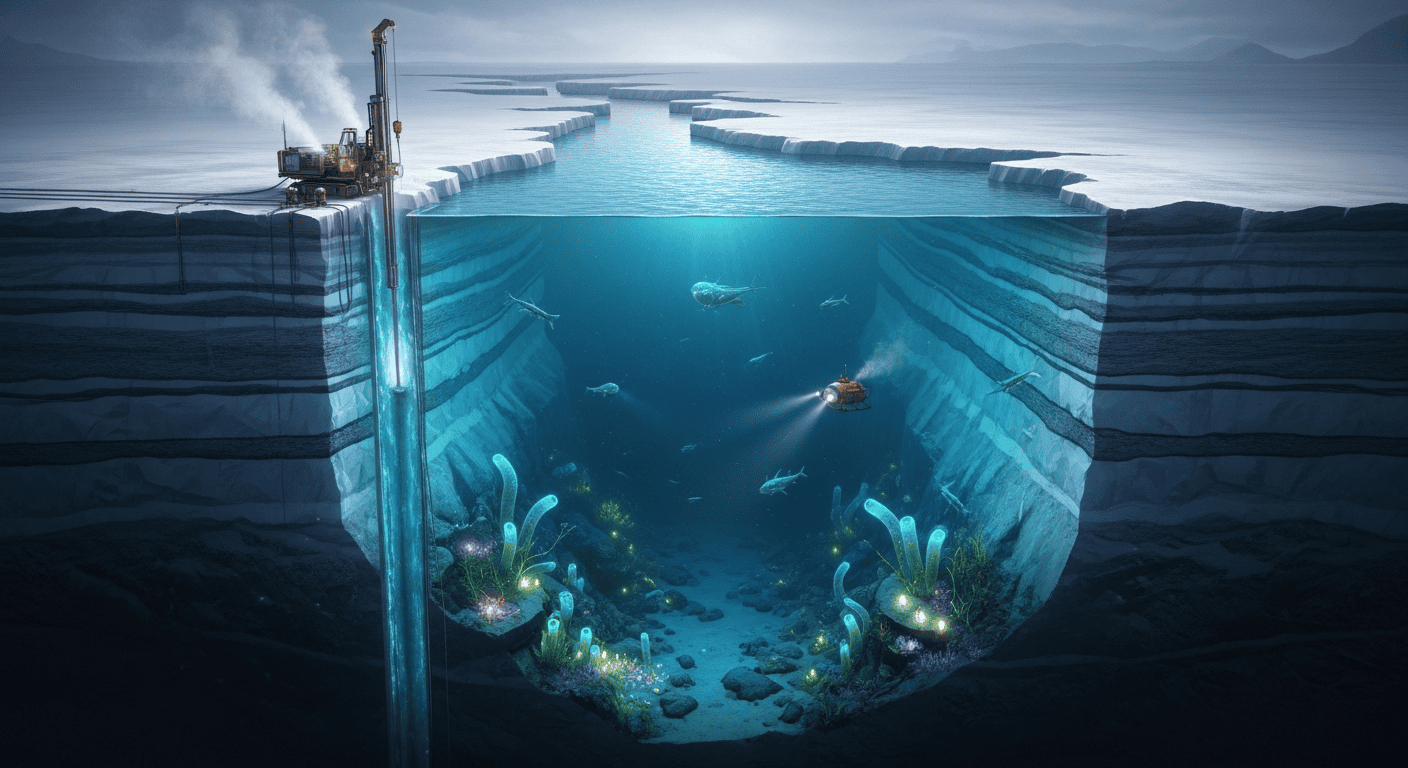
Lake Vostok: Antarctica's Hidden World Beneath the Ice
A Frozen Time Capsule
Deep beneath Antarctica's frozen wasteland lies one of Earth's most extraordinary secrets: Lake Vostok, a pristine aquatic world that has remained hidden under nearly 4 kilometers of ice for an estimated 15 million years. This subglacial giant, roughly the size of Lake Ontario at approximately 250 kilometers long and 50 kilometers wide, represents one of the most isolated ecosystems ever discovered on our planet.
Discovery and Scientific Marvel
Russian scientists first detected Lake Vostok in the 1970s using seismic surveys, but its true significance wasn't understood until the 1990s when satellite altimetry and ice-penetrating radar confirmed its massive scale. Located at Russia's Vostok Station in East Antarctica, this remarkable body of water sits at coordinates that place it among the most remote locations on Earth.
The lake maintains a liquid state despite the brutal Antarctic environment due to geothermal heat from the Earth's core and the immense pressure from the overlying ice sheet. Water temperatures hover around -3°C (27°F), kept from freezing by the crushing weight of ice above. This unique environment has created conditions unlike anywhere else on our planet.
Life in Isolation
In 2012, Russian researchers achieved a breakthrough by drilling through the ice sheet and extracting water samples from the lake's depths. What they discovered challenged our understanding of life's limits: previously unknown bacterial species thriving in this ancient, isolated ecosystem. These microorganisms have evolved in complete darkness, under extreme pressure, with no contact with the outside world for millions of years.
The water itself is remarkably pure, containing 50 times more oxygen than typical freshwater lakes due to the immense pressure. Some scientists theorize that this oxygen-rich environment, combined with minerals from the lake bed, could support complex microbial communities that represent entirely new branches of life.
Scientific Implications and Theories
Lake Vostok's isolation makes it a natural laboratory for studying extremophile organisms and evolution in closed systems. Some researchers propose that similar conditions might exist on Jupiter's moon Europa or Saturn's moon Enceladus, making Vostok a potential analog for extraterrestrial life.
The sediments at the lake's bottom, estimated to be millions of years old, could contain a record of ancient climate conditions and life forms that predate the formation of the Antarctic ice sheet. Some scientists suggest the lake might harbor multicellular organisms or even more complex life forms that have adapted to this unique environment over geological timescales.
Mysteries Remain
Despite significant discoveries, Lake Vostok continues to guard its secrets. The full extent of its ecosystem remains unknown, and the challenge of studying such an isolated environment without contaminating it presents ongoing difficulties. Each sample reveals new questions about how life adapts and thrives in Earth's most extreme environments.
This frozen world beneath Antarctica's ice serves as a reminder that our planet still holds profound mysteries, offering glimpses into life's remarkable adaptability and the potential for discovery in the most unexpected places.
[!] Various theories exist. Information may contain errors.