Gunung Padang - 20,000-Year-Old Mega Pyramid?
Indonesian site may be world's oldest pyramid. Ground radar reveals hidden structures
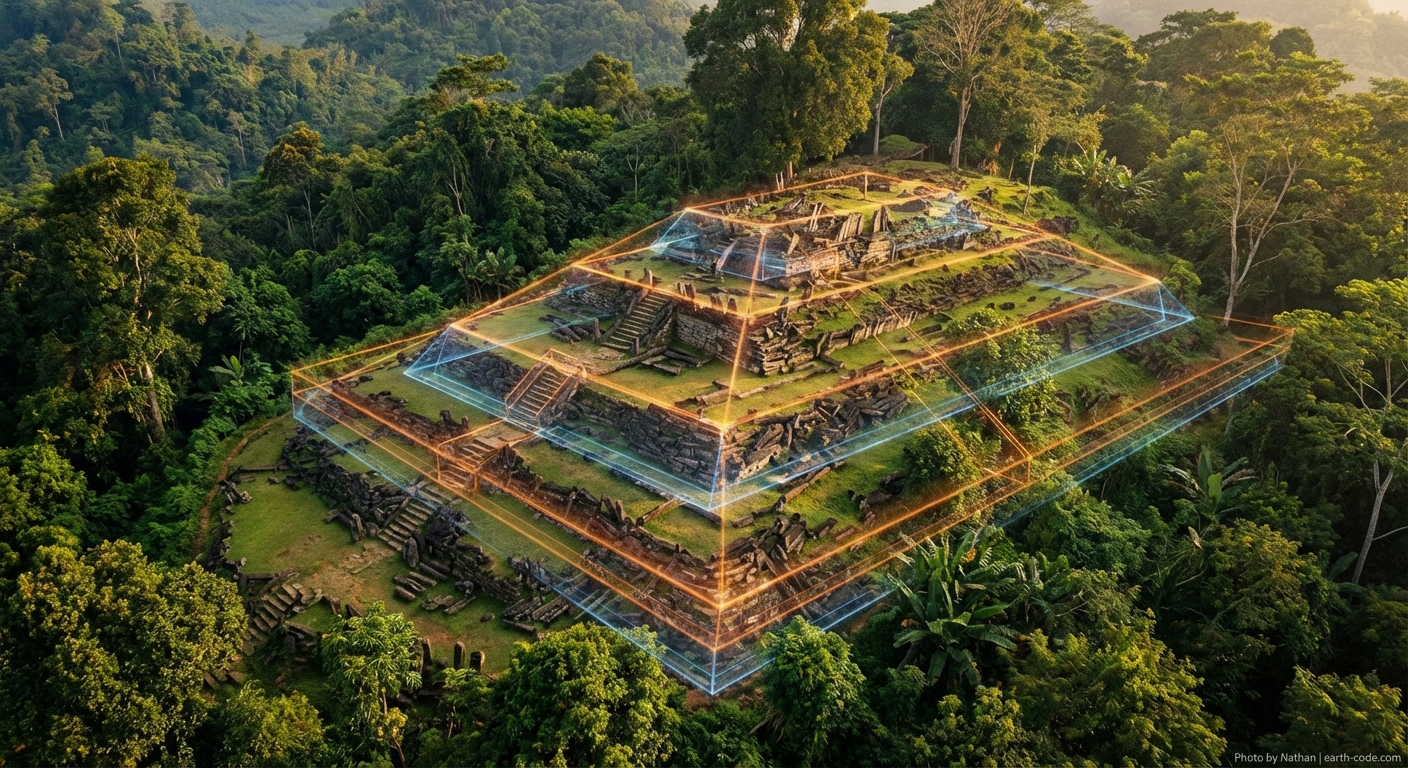
Could this Indonesian site be a pyramid 10,000 years older than Egypt's?
Gunung Padang: Indonesia's Controversial 20,000-Year-Old Mega Pyramid
A Sacred Mountain Hiding Ancient Secrets
Hidden beneath the lush vegetation of West Java, Indonesia, lies what could be humanity's most ancient architectural marvel. Gunung Padang, meaning "Mountain of Light," has sparked fierce archaeological debate since researchers began uncovering evidence that this terraced hillside might conceal a massive pyramid complex dating back an astounding 20,000 years – predating Stonehenge by 15,000 years and the Great Pyramid of Giza by 16,500 years.
Layers of Mystery Beneath Sacred Ground
The site, located approximately 120 kilometers south of Jakarta, has long been revered by locals as a sacred place. What appears on the surface as naturally arranged volcanic rock formations tells only part of the story. Advanced ground-penetrating radar and seismic surveys have revealed multiple buried layers extending deep into the hill's core.
Dr. Danny Hilman Natawidjaja, a geologist leading the Indonesian research team, has identified five distinct construction phases spanning thousands of years. The surface layer, containing megalithic stones arranged in terraces, dates to around 2,500 years ago. But deeper layers tell a more extraordinary tale. At depths of 3-10 meters, structures appear to date back 8,500-9,500 years. Most remarkably, the deepest layer – extending 15-28 meters below ground – shows construction techniques that radiocarbon dating suggests are 20,000-22,000 years old.
Revolutionary Evidence or Geological Formation?
Ground-penetrating radar has revealed what researchers interpret as chambers, tunnels, and voids within the structure, suggesting sophisticated internal architecture. Thermal imaging shows temperature variations consistent with hollow spaces, while electrical resistance mapping indicates the presence of organized stone arrangements rather than random geological deposits.
The team's drilling samples have produced organic materials that consistently date to the Pleistocene era. Core samples from depths of 5-15 meters contain structured arrangements of andesite columns and clay cement, materials that appear deliberately placed rather than naturally occurring.
However, the archaeological establishment remains deeply skeptical. Critics argue that the dating methods focus on organic materials between stone layers rather than the construction itself, and that the apparent "structures" could result from natural geological processes over millennia. The Indonesian government's enthusiasm for the project has also raised questions about scientific objectivity.
Implications for Human Prehistory
If verified, Gunung Padang would revolutionize our understanding of ancient civilizations. The conventional timeline places the first complex societies around 6,000-8,000 years ago. A 20,000-year-old megalithic structure would suggest that sophisticated human cultures existed during the Last Glacial Maximum, when ice sheets covered much of Europe and North America.
The construction would require advanced knowledge of astronomy, engineering, and social organization – capabilities not attributed to hunter-gatherer societies of that era. This challenges fundamental assumptions about human cultural evolution and the development of civilization.
The Ongoing Investigation
Research continues with international collaboration, including teams from Japan and Australia. Plans for careful excavation aim to expose internal chambers while preserving the site's integrity. Whether Gunung Padang proves to be humanity's oldest pyramid or an extraordinary natural formation, it undoubtedly represents one of archaeology's most intriguing mysteries.
The mountain keeps its secrets well, but each layer revealed brings us closer to understanding our ancient past.
[!] Various theories exist. Information may contain errors.