Gobekli Tepe Animal Symbols as Star Maps
Animals carved at world's oldest temple represent constellations? Theory of comet impact record
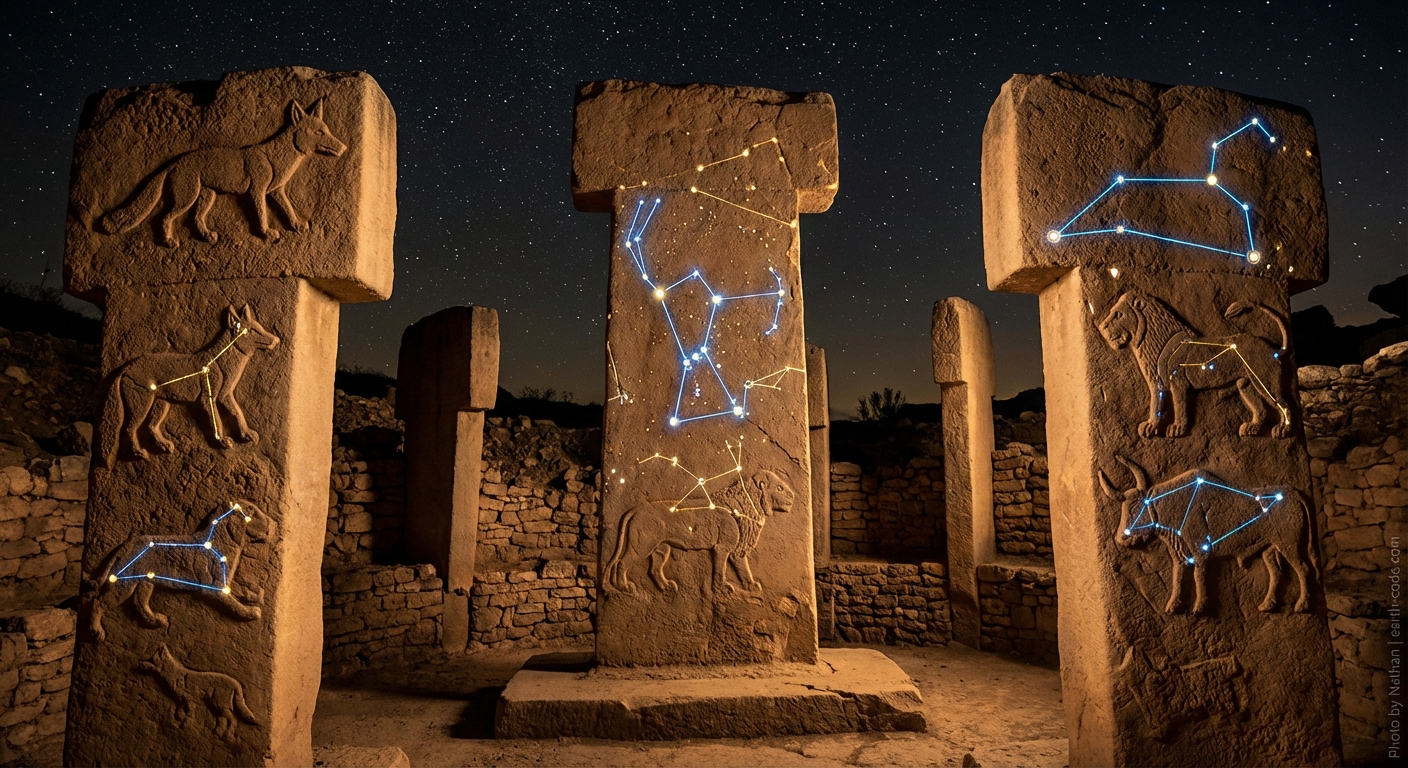
Did a 10,000-year-old mysterious temple record cosmic events?
Göbekli Tepe's Ancient Astronomy: When Stone Animals Point to the Stars
Hidden beneath the rolling hills of southeastern Turkey for over 11,000 years, Göbekli Tepe continues to revolutionize our understanding of prehistoric civilizations. This remarkable archaeological site, often called the world's first temple, features massive stone pillars adorned with intricate animal carvings that may hold secrets far more profound than mere artistic expression. A growing body of research suggests these ancient symbols could represent one of humanity's earliest attempts at astronomical record-keeping—and possibly evidence of a catastrophic cosmic event.
Decoding the Stone Menagerie
The towering T-shaped pillars at Göbekli Tepe showcase a stunning array of carved creatures: vultures with outstretched wings, serpents, wild boar, foxes, and scorpions. Archaeologist Martin Sweatman from the University of Edinburgh has proposed that these aren't random decorative choices but deliberate representations of constellation patterns visible in the night sky around 10,950 BCE.
Using astronomical software to map ancient skies, researchers identified striking correlations between animal placements on Pillar 43—the site's most famous "Vulture Stone"—and specific star formations. The prominent vulture carving aligns remarkably with the constellation Cygnus, while the scorpion matches the position of Scorpius during the proposed timeframe.
The Younger Dryas Connection
Perhaps most intriguingly, this astronomical interpretation connects to the Younger Dryas period (12,900-11,700 years ago), a dramatic climate cooling event that marked the end of the last Ice Age. Sweatman's research suggests the Göbekli Tepe carvings commemorate a comet impact or airburst that triggered this global climate shift.
The theory proposes that ancient inhabitants witnessed fragments of comet Encke striking Earth, creating widespread devastation. The animal symbols would thus serve as both a star map marking the impact's timing and a memorial to this world-changing catastrophe. Supporting evidence includes elevated levels of platinum and microscopic diamonds in sediment layers from this period, consistent with extraterrestrial impact signatures.
Challenging Traditional Timelines
This astronomical interpretation challenges conventional archaeological thinking about prehistoric societies. If accurate, it suggests hunter-gatherer communities possessed sophisticated astronomical knowledge and could create permanent monuments encoding complex celestial observations—capabilities previously attributed only to later agricultural civilizations.
The precision required to align stone carvings with specific star positions implies these ancient people maintained detailed sky-watching traditions across generations. Such dedication to astronomical observation would represent a cognitive leap previously thought to occur much later in human development.
Beyond Simple Symbolism
While some scholars remain skeptical, viewing the animal carvings as spiritual or totemic symbols rather than astronomical records, the correlation patterns are statistically compelling. The research opens fascinating possibilities about prehistoric intellectual capabilities and suggests our ancestors possessed far more sophisticated knowledge systems than traditionally believed.
The implications extend beyond archaeology into questions about early human responses to cosmic threats and the role of astronomical observation in shaping religious and cultural practices. Göbekli Tepe may represent humanity's first attempt to preserve crucial knowledge for future generations through permanent stone monuments.
[!] Various theories exist. Information may contain errors.