Giant Skeletons - Truth Behind the Vanished Evidence
Multiple giant skeleton discoveries reported in 19th century. Why did the evidence vanish?
Giant Skeletons - Truth Behind the Vanished Evidence
The Mystery of America's Lost Giants
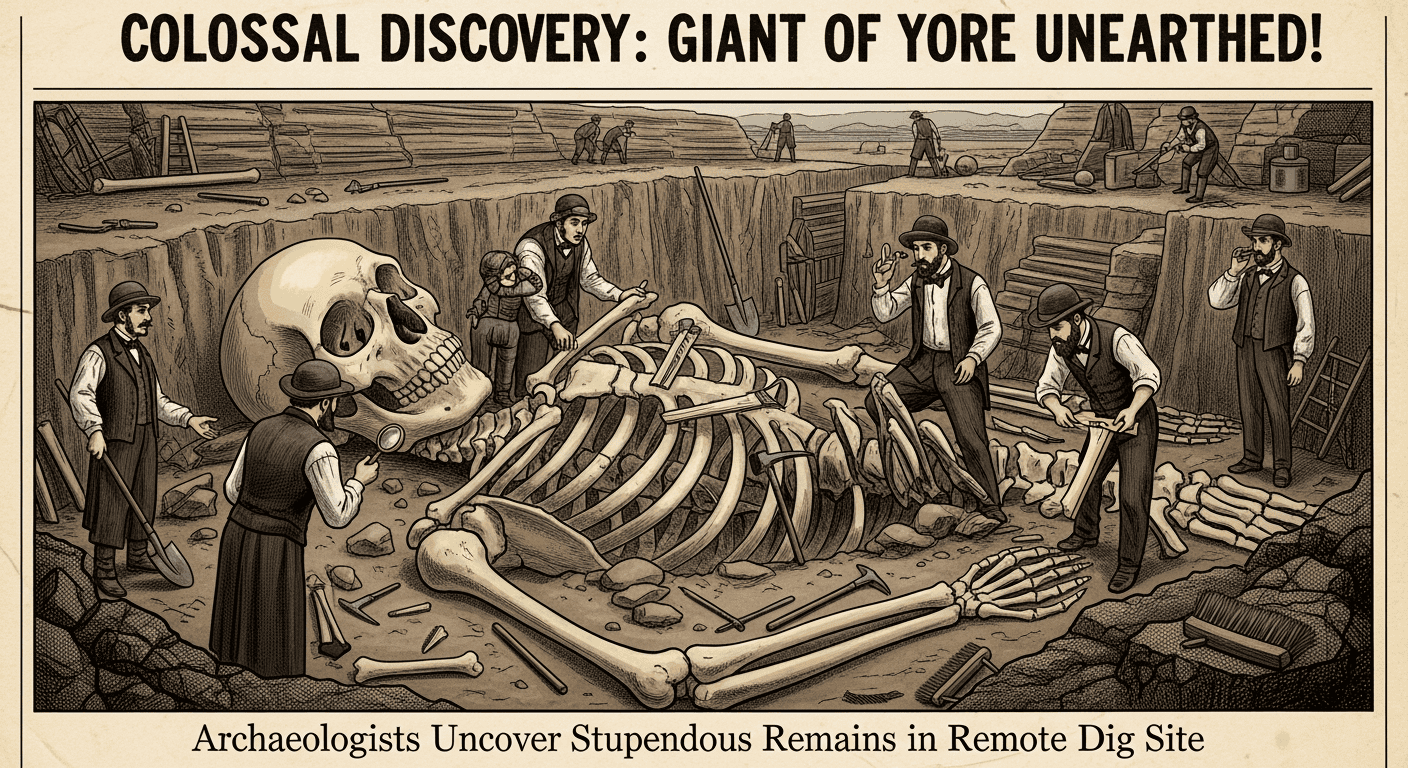
In the dusty archives of 19th-century American newspapers lies a puzzling pattern of reports that has captivated researchers for decades. Between 1850 and 1920, hundreds of articles documented the discovery of unusually large human skeletons across the United States, particularly in the Ohio River Valley and Great Lakes region. These weren't isolated incidents but systematic findings that newspaper editors treated as legitimate archaeological news.
The Archaeological Record
The most frequently cited discoveries occurred during the Great Mound Builder excavations of the late 1800s. The Seneca Advertiser reported in 1871 the discovery of skeletons measuring between 7 and 9 feet tall near Cayuga Lake, New York. Similarly, the American Antiquarian documented findings in Ohio's Kanawha Valley where excavators allegedly uncovered remains of individuals reaching 8 feet in height.
One of the most detailed accounts appeared in the New York Times on May 4, 1912, describing the discovery of 18 skeletons of "extraordinary size" in southwestern Wisconsin. The report claimed these remains were found alongside copper artifacts and were significantly larger than typical Native American burials from the same period.
The Smithsonian Institution frequently appeared in these reports as the recipient of these unusual specimens. Between 1890 and 1930, dozens of newspaper articles mentioned the institution collecting oversized skeletal remains for further study. The Washington Post alone published at least 20 such reports during this period.
The Vanishing Act
Here's where the mystery deepens. Despite extensive documentation in period newspapers, virtually none of these giant skeletons exist in modern museum collections. The Smithsonian Institution's current records show no evidence of housing such specimens, leading to decades of speculation about their fate.
Several theories attempt to explain this disappearance. Academic consolidation in the early 20th century saw many smaller regional collections transferred or discarded. The 1906 Antiquities Act also changed how archaeological materials were handled, potentially leading to the loss of improperly documented specimens.
Some researchers suggest these reports resulted from measurement errors or media sensationalism. The transition from various measurement systems to standardized metrics may have contributed to exaggerated claims. Additionally, newspaper editors of the era often embellished stories to increase readership.
The Institutional Response
Modern archaeologists point to Native American burial practices as a more likely explanation. Certain tribes, particularly in the Ohio Valley, practiced ceremonial bone modification and created elaborate burial mounds that could create misleading archaeological contexts. The 1990 Native American Graves Protection Act also led to the repatriation of thousands of remains, potentially including any legitimate oversized specimens.
The Smithsonian has consistently denied any cover-up, attributing the missing evidence to normal archival processes and the institution's evolution over 150 years. However, the sheer volume of 19th-century reports continues to fuel speculation about deliberate suppression.
Conclusion
The giant skeleton mystery represents a fascinating intersection of legitimate archaeology, media history, and cultural mythology. While the physical evidence has vanished, the documented reports remain—leaving us to wonder whether America's ancient past holds secrets that mainstream archaeology has yet to fully understand.
[!] Various theories exist. Information may contain errors.