Paracas Elongated Skulls - Artificial Deformation or Different Species
Abnormally elongated skulls found in Peru. Surprising results from DNA analysis
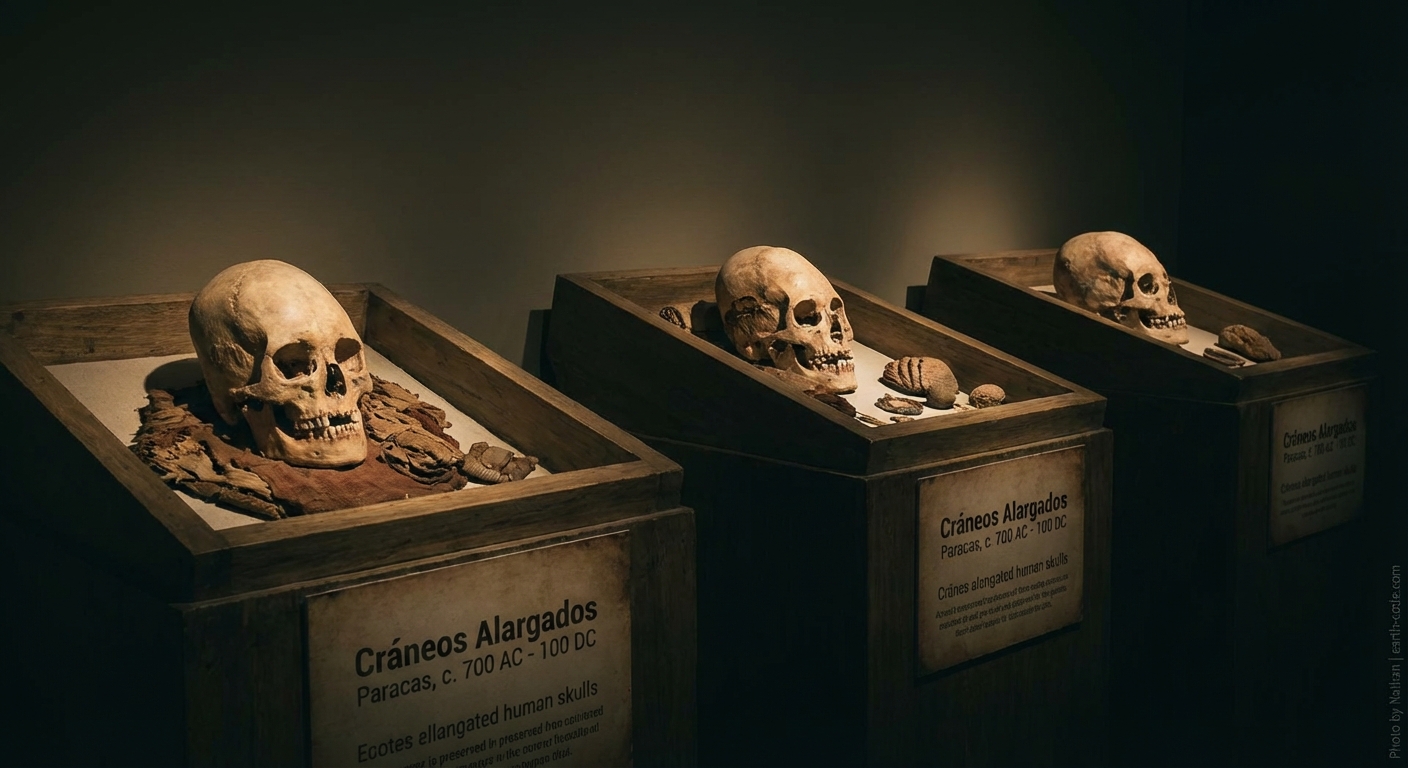
Mysterious elongated skulls in Peru may be new species, DNA reveals
The Paracas Elongated Skulls: Ancient Mystery Beneath the Peruvian Desert
A Discovery That Challenges Our Understanding
Deep in the arid landscapes of Peru's Paracas Peninsula, archaeologists have uncovered one of the most perplexing mysteries in human history. Since the 1920s, over 300 elongated skulls dating back approximately 2,000-3,000 years have been excavated from the Paracas Necropolis, challenging our understanding of ancient Andean civilizations and human anatomy itself.
The Paracas Culture and Their Extraordinary Remains
The Paracas culture flourished between 800 BCE and 100 BCE along Peru's southern coast. Initially discovered by Peruvian archaeologist Julio Tello in 1928, these ancient burial sites contained mummified remains wrapped in some of the world's finest textiles. However, it was the skulls themselves that captured global attention.
These elongated craniums are 25% larger and 60% heavier than typical human skulls, with volumes reaching up to 1,500 cubic centimeters compared to the modern human average of 1,400 cubic centimeters. Most remarkably, many specimens display only one parietal plate instead of the two found in normal human skulls, along with three small holes in the back where the neck muscles attach—anatomical features absent in Homo sapiens.
Artificial Deformation: The Traditional Explanation
For decades, mainstream archaeology has attributed these unusual skull shapes to cranial modification—a practice documented across numerous ancient cultures worldwide. This process involves binding infants' heads with boards, cloth, or other materials during the first few years of life when skull bones remain malleable.
Evidence supporting this theory includes:
- Archaeological findings of binding apparatus at various sites
- Historical records from Spanish conquistadors describing similar practices
- Comparative studies showing cranial modification in other Pre-Columbian cultures
DNA Analysis: Unexpected Revelations
In 2014, independent researcher Brien Foerster commissioned DNA analysis of several Paracas skull samples. The preliminary results, conducted by laboratories in the United States and Canada, yielded startling findings that have sparked intense debate.
The mitochondrial DNA analysis reportedly revealed:
- Unknown genetic sequences not matching any known human populations
- Possible European and Middle Eastern markers predating known contact by over 2,000 years
- Genetic anomalies suggesting these individuals may represent a distinct human subspecies
However, these results remain highly controversial within the scientific community, with many experts questioning the methodology, sample contamination possibilities, and peer-review status of the studies.
The Ongoing Scientific Debate
While some researchers propose these skulls represent evidence of an unknown human population or even deliberate genetic manipulation by advanced ancient civilizations, mainstream science maintains that artificial cranial deformation remains the most plausible explanation.
Dr. Ann H. Ross from North Carolina State University argues that extreme cranial modification can indeed produce the anatomical anomalies observed in Paracas skulls. Conversely, researchers like Lloyd Pye have suggested these remains indicate hybridization between modern humans and an unknown species.
Conclusion: A Mystery That Endures
The Paracas elongated skulls continue to challenge our understanding of ancient human populations and cultural practices. Whether these remarkable specimens represent sophisticated cranial modification techniques, an unknown human subspecies, or something else entirely, they undeniably demonstrate the complexity and diversity of ancient Andean civilizations.
As technology advances and more comprehensive studies are conducted, the truth behind these extraordinary skulls may finally emerge from the Peruvian desert sands.
[!] Various theories exist. Information may contain errors.