Easter Island Moai Transport Mystery Finally Solved
How Easter Island Moai statues were transported revealed through analysis of unfinished statues
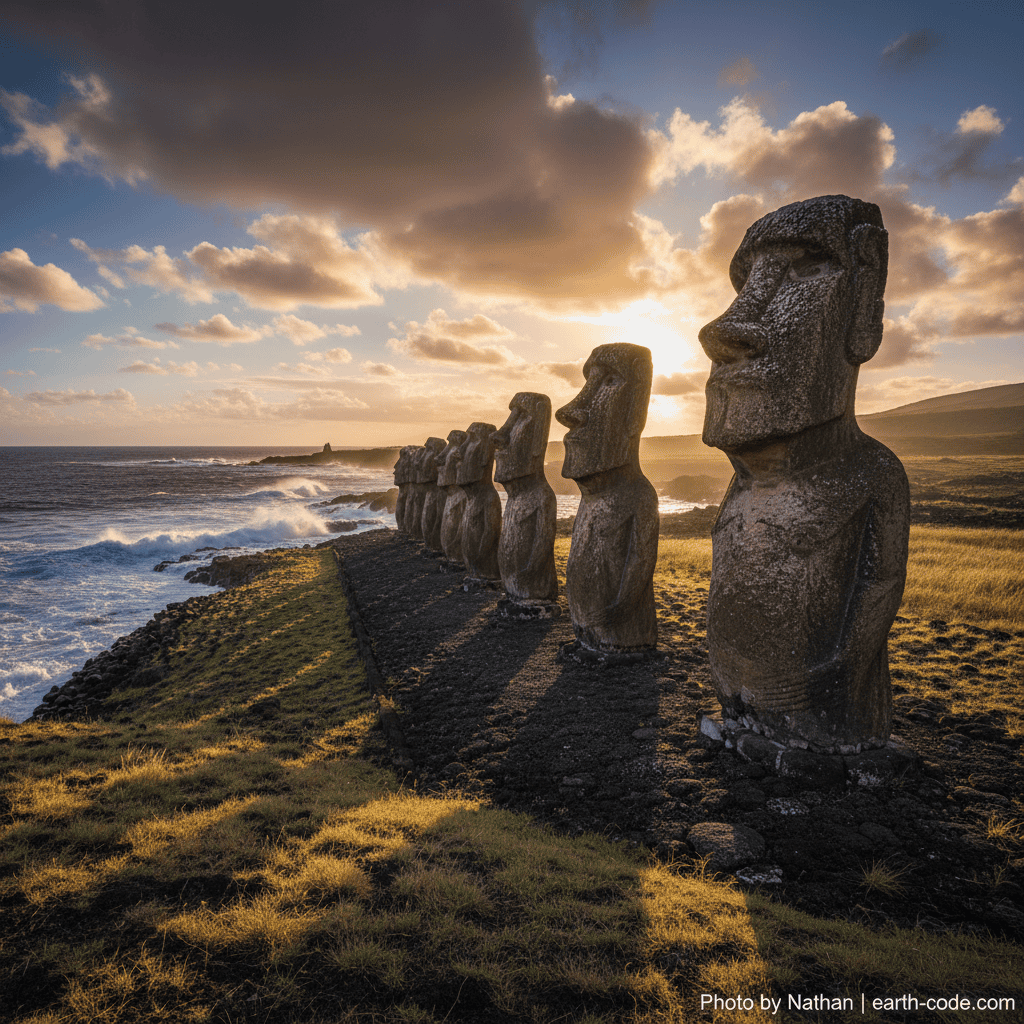
Did they walk? Surprising truth about Moai transport revealed
The Easter Island Moai Transport Mystery Finally Solved
Ancient Engineering Genius Revealed Through Stone Giants
For centuries, the massive stone heads of Easter Island (Rapa Nui) have puzzled archaeologists and captured imaginations worldwide. How did the ancient Polynesian inhabitants transport these colossal 14-ton statues across the island's rugged terrain without wheels, large animals, or sophisticated machinery? Recent archaeological breakthroughs have finally cracked this enduring mystery.
The Revolutionary Walking Theory
The answer lies not in alien intervention or lost technology, but in ingenious human engineering. Researchers have determined that the Moai were literally "walked" to their destinations using a coordinated rocking motion controlled by ropes. This technique, passed down through oral traditions of the Rapanui people, has now been scientifically validated.
Archaeological teams, led by researchers from UCLA and the University of Manchester, conducted extensive experiments using replica statues. They discovered that by attaching ropes to the statue's head and base, small teams could create a controlled rocking motion that moved the Moai forward in an upright position. This "walking" method required only 15-18 people to transport a 5-ton statue, making it remarkably efficient for the island's small population of approximately 3,000 inhabitants at its peak around 1200-1500 CE.
The key breakthrough came from analyzing the 400 unfinished statues scattered around Rano Raraku quarry. These abandoned giants provided crucial evidence about transport methods, as many were found along ancient pathways in upright positions, suggesting they were moved standing rather than lying down.
Roads Built for Giants
Perhaps most remarkably, the island's road system was specifically engineered for Moai transport. Archaeological surveys have mapped an extensive network of stone-paved roads radiating from the central quarry to ceremonial platforms (ahu) around the island's perimeter. These roads, some stretching over 14 kilometers, feature carefully constructed surfaces with slight depressions down the center—perfectly designed for the rocking transport method.
The roads also incorporate strategic curves and gradients that would have helped control the massive statues' momentum during transport. Computer modeling has shown that these carefully planned routes made it possible to move statues weighing up to 82 tons—the weight of the largest completed Moai.
Solving the Timeline Puzzle
This transport method also explains the island's construction timeline. Between 1250-1500 CE, the Rapanui people carved and transported nearly 1,000 statues. The walking technique's efficiency meant that statue production could continue at the quarry while completed Moai were simultaneously transported to their destinations, creating an impressive assembly line of ancient engineering.
The discovery has revolutionized our understanding of Polynesian engineering capabilities and challenged assumptions about technological limitations of ancient civilizations. The Rapanui people achieved remarkable feats through collaborative organization and innovative problem-solving rather than brute force.
A Legacy Preserved in Stone
Today, these ancient roads and the scattered unfinished statues serve as a testament to human ingenuity. The transport mystery's solution reveals not just how the Moai moved, but illuminates the sophisticated society that created one of archaeology's most enduring puzzles.
[!] Various theories exist. Information may contain errors.