Dead Sea Scrolls - Biblical Manuscripts Awakened After 2000 Years
Oldest biblical manuscripts accidentally found by shepherd boy. Remarkable similarities and differences with modern Bible
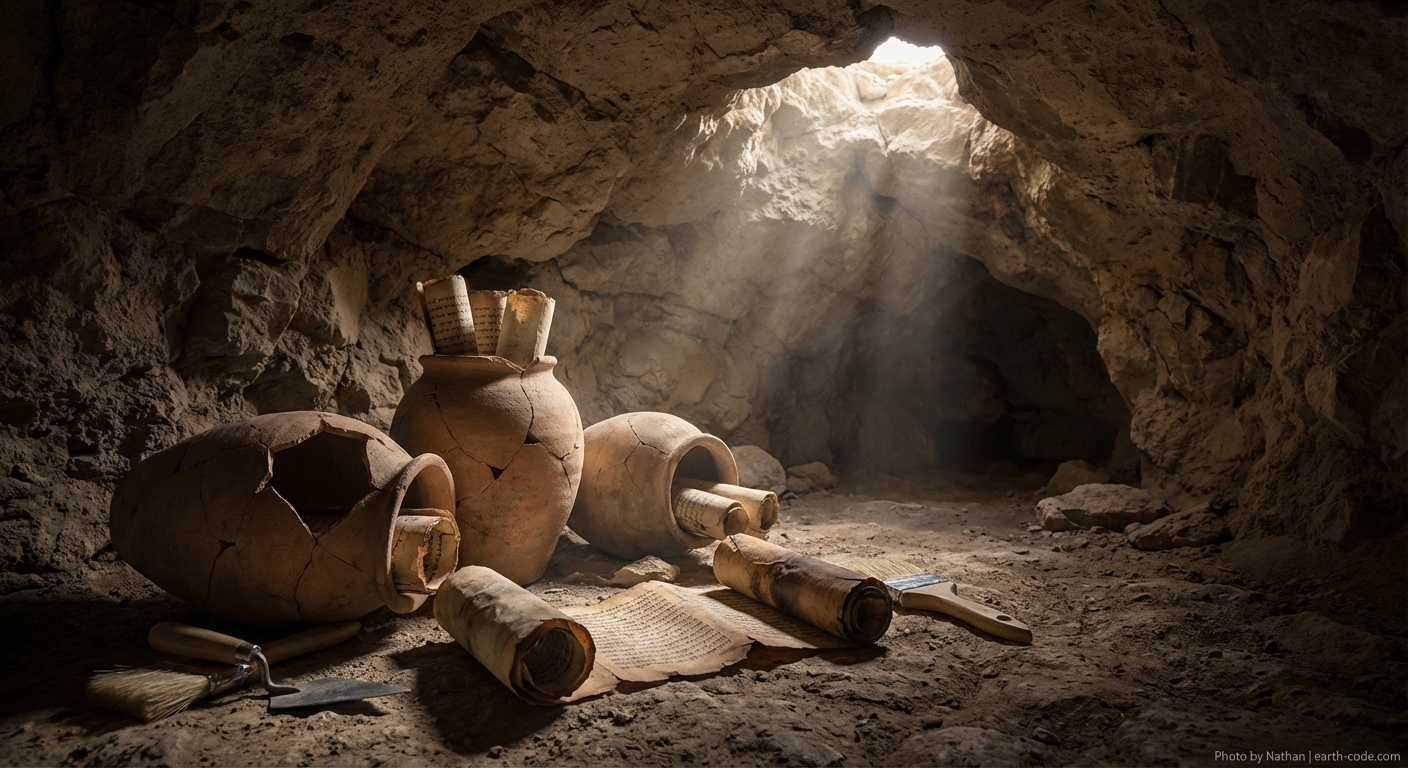
A shepherd boy's thrown stone changed biblical studies forever.
Dead Sea Scrolls - Biblical Manuscripts Awakened After 2000 Years
A Shepherd's Accidental Discovery That Changed Biblical History
In the spring of 1947, a young Bedouin shepherd named Muhammad edh-Dhib was searching for a lost goat near the northwestern shore of the Dead Sea. Throwing a stone into a cave to scare out his animal, he heard the unexpected sound of breaking pottery. What followed was arguably the most significant archaeological discovery of the 20th century—the Dead Sea Scrolls, ancient manuscripts that had been hiding in the Judean Desert caves for nearly 2,000 years.
The Qumran Treasure Trove
The initial discovery at Qumran Cave 1 led to extensive excavations across 11 caves between 1947 and 1956. Archaeologists and Bedouin treasure hunters recovered approximately 900 manuscripts and fragments, dating primarily between 300 BCE and 70 CE. These documents, written mostly in Hebrew and Aramaic, with some Greek texts, represent the oldest known copies of biblical texts—predating previously known manuscripts by over 1,000 years.
The scrolls contain fragments of every book in the Hebrew Bible except Esther, with Isaiah being the most completely preserved. The famous Great Isaiah Scroll, measuring over 24 feet long, contains the entire book and differs remarkably little from modern biblical texts despite its antiquity.
Revolutionary Revelations and Intriguing Variations
The scrolls have provided unprecedented insights into the textual transmission of biblical literature. Most striking is their overall fidelity to modern biblical texts—variations amount to less than 5% and are primarily minor spelling differences or grammatical changes. This remarkable consistency suggests an extraordinarily careful tradition of manuscript copying over two millennia.
However, some fascinating differences emerged. Certain Psalms appear in different orders, and some biblical books show alternative versions. The Septuagint (Greek translation of the Hebrew Bible) sometimes aligns more closely with Dead Sea fragments than with the traditional Hebrew Masoretic Text, suggesting multiple textual traditions existed simultaneously.
The Mysterious Qumran Community
Beyond biblical texts, the scrolls revealed the existence of a previously unknown Jewish sect, likely the Essenes mentioned by ancient historians Josephus and Philo. The Community Rule and Damascus Document describe an ascetic group that practiced ritual purity, communal living, and apocalyptic beliefs. They viewed themselves as "Sons of Light" preparing for an end-times battle against the "Sons of Darkness."
The War Scroll details elaborate military preparations for this cosmic conflict, while the Thanksgiving Hymns reveal deeply personal spiritual expressions. Most intriguingly, some scholars suggest connections between Essene practices and early Christianity, noting similarities in baptismal rites and communal meals.
Ongoing Mysteries and Modern Impact
Despite decades of scholarship, questions persist. Who exactly were these sectarians? Why did they hide their precious manuscripts? The Temple Scroll, at 28 feet the longest document, presents an idealized temple that never existed—was it visionary literature or architectural planning?
The scrolls continue revolutionizing biblical scholarship, providing unprecedented windows into Second Temple Judaism and the world that produced both rabbinic Judaism and Christianity. They demonstrate that ancient Jewish thought was far more diverse than previously understood.
Legacy of an Ancient Library
Today, these fragile documents reside primarily in Jerusalem's Israel Museum and the Palestine Archaeological Museum. Advanced imaging techniques continue revealing previously illegible text fragments, ensuring that Muhammad edh-Dhib's accidental discovery keeps yielding scholarly treasures.
The Dead Sea Scrolls bridge an extraordinary gap between ancient and modern worlds, showing how sacred texts survived through careful preservation and divine providence—or remarkable historical accident.
[!] Various theories exist. Information may contain errors.