Crystal Skulls - Ancient Artifacts or Modern Forgeries
Quartz skulls allegedly found in Central America. Scientific analysis reveals contradictions in creation date
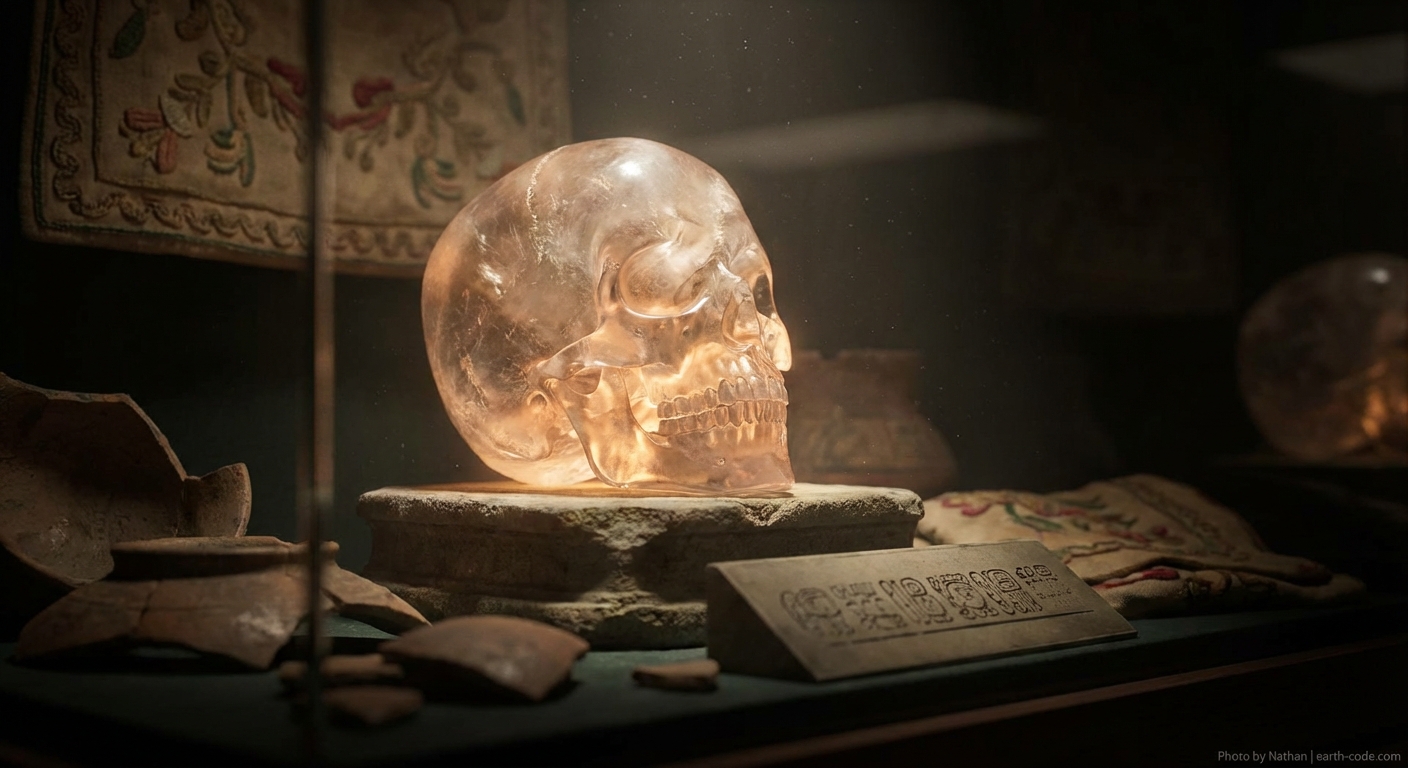
What shocking truth lies behind these too-perfect crystal skulls?
The Crystal Skull Enigma: Unraveling Mesoamerica's Most Controversial Artifacts
The Allure of Ancient Crystal
In the shadowy corners of museums and private collections worldwide lie some of archaeology's most controversial artifacts: crystal skulls carved from solid quartz. These translucent masterpieces, allegedly discovered in the jungles of Central America, have captivated imaginations for over a century. With their hollow eye sockets and enigmatic grins, they seem to bridge the gap between ancient mysticism and modern mystery.
The most famous specimen, known as the Mitchell-Hedges skull, supposedly emerged from the Maya ruins of Lubaantun in Belize around 1924. Explorer F.A. Mitchell-Hedges claimed his adopted daughter Anna discovered it on her 17th birthday, buried beneath a collapsed altar. Standing nearly 5 inches tall and weighing 11.7 pounds, this particular skull demonstrates remarkable craftsmanship, with a detachable jawbone and optical properties that create haunting light effects.
Scientific Scrutiny Reveals Modern Secrets
However, rigorous scientific analysis has systematically dismantled these romantic origin stories. In 2008, researchers at the British Museum, Smithsonian Institution, and Musée du Quai Branly conducted comprehensive studies using electron microscopy and X-ray crystallography on several prominent crystal skulls.
The results were damning. Microscopic examination revealed tool marks consistent with modern rotary grinding equipment, not the bronze tools available to pre-Columbian civilizations. The surface showed parallel scratching patterns typical of 19th and 20th-century lapidary techniques. Most tellingly, the quartz itself originated from Brazil or Madagascar—regions with no historical connection to Maya civilization.
Dr. Margaret Sax of the British Museum discovered that the skulls' smooth, polished surfaces could only have been achieved using diamond-tipped tools and industrial polishing compounds unavailable before the mid-1800s. The precision cuts and symmetrical features would have required hundreds of hours using traditional methods, yet showed no evidence of the intermediate roughening stages that would be inevitable in ancient craftsmanship.
The Birth of a Modern Myth
The crystal skull phenomenon appears to have originated in 19th-century Europe, where skilled German craftsmen in the town of Idar-Oberstein specialized in creating decorative objects from exotic minerals. These artisans had access to Brazilian quartz and the technological expertise to create convincing "archaeological" artifacts for the growing antiquities market.
Eugène Boban, a French antiquities dealer active in Mexico City during the 1860s-1880s, likely commissioned many of these skulls. His shop catered to wealthy collectors seeking authentic pre-Columbian artifacts, and crystal skulls perfectly satisfied the Victorian fascination with death symbolism and exotic cultures.
Legacy of Deception
Despite overwhelming scientific evidence, crystal skulls continue to attract believers who attribute supernatural properties to these objects. They've inspired countless books, documentaries, and even Hollywood films, demonstrating how modern myths can overshadow archaeological facts.
The crystal skull controversy serves as a cautionary tale about the importance of provenance and scientific analysis in archaeology. While these artifacts may lack ancient origins, they remain fascinating examples of skilled craftsmanship and the enduring human desire to connect with mysterious pasts.
[!] Various theories exist. Information may contain errors.