Bosnian Pyramids - Europe's Biggest Mystery
Are Bosnia's hills 30,000-year-old pyramids? The debate dividing scientists
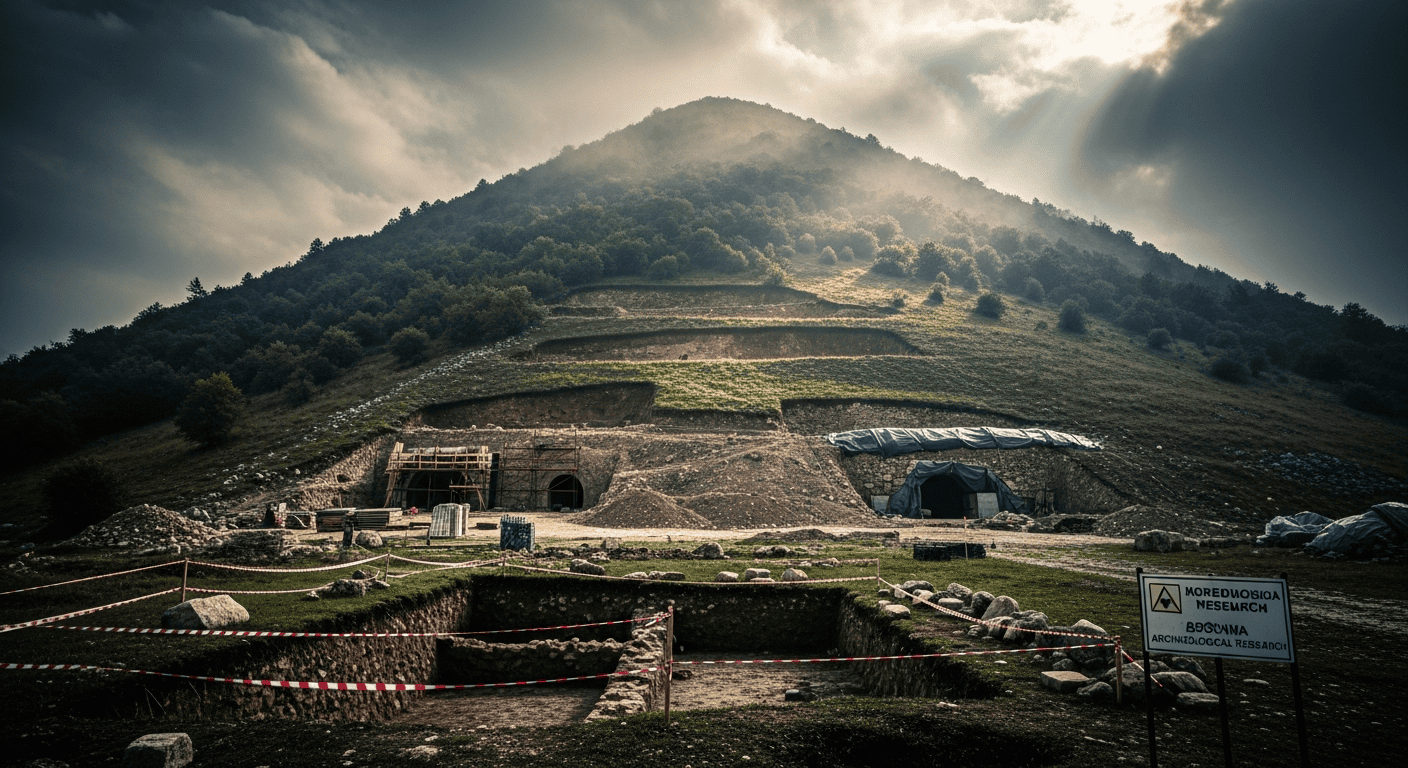
The Bosnian Pyramids: Europe's Most Controversial Archaeological Claim
A Discovery That Shook the Archaeological World
In 2005, Semir Osmanagić, a Bosnian-American businessman, made an extraordinary claim that would ignite one of archaeology's most heated debates. Standing in the hills near Visoko, Bosnia and Herzegovina, just 20 kilometers north of Sarajevo, Osmanagić declared he had discovered Europe's first pyramids—structures he believed to be over 30,000 years old and larger than Egypt's Great Pyramid of Giza.
The Pyramid of the Sun, as Osmanagić named the largest formation, rises approximately 220 meters above the surrounding landscape—significantly taller than Giza's 146-meter Great Pyramid. Alongside it, he identified four other structures: the Pyramids of the Moon, Dragon, Love, and Earth, forming what he called the "Bosnian Valley of the Pyramids."
The Evidence and the Excavations
Since 2006, extensive excavations have uncovered intriguing features that fuel the pyramid hypothesis. Workers have exposed stone blocks with seemingly precise geometric cuts, concrete-like surfaces, and most remarkably, an extensive network of underground tunnels called Ravne. These tunnels stretch for kilometers beneath the hills, featuring megalithic stone spheres weighing several tons and chambers with what supporters claim are artificial walls.
Geological surveys have revealed the hills' unusual characteristics: precisely oriented faces aligned with cardinal directions, uniform slopes of approximately 45 degrees, and electromagnetic phenomena that Osmanagić's team argues are inconsistent with natural hill formations. Ground-penetrating radar has detected geometric anomalies beneath the surface, while thermal imaging shows temperature variations suggesting internal structures.
The Ravne tunnel complex has yielded the most compelling evidence, with carbon dating of organic materials suggesting human activity spanning thousands of years. Stone blocks within the tunnels display tool marks and geometric precision that supporters argue could not occur naturally.
The Scientific Backlash
The archaeological establishment has responded with overwhelming skepticism. The European Association of Archaeologists issued a formal statement in 2006 denouncing the pyramid claims as "a cruel hoax on an unsuspecting public." Leading geologists argue the formations are natural flatirons—triangular rock faces created by sedimentary layering and erosion over millions of years.
Critics point to the medieval settlements and Ottoman-era structures found during excavations, suggesting the supposed "pyramid stones" are simply remnants of historical human activity. They argue that pareidolia—the tendency to perceive meaningful patterns in random formations—explains why people see pyramids in naturally occurring hills.
The Geological Survey of Bosnia and Herzegovina maintains that core samples show typical Miocene sedimentary layers consistent with natural geological processes, not artificial construction.
A Mystery That Endures
Despite fierce academic opposition, excavations continue with international volunteers and private funding. The site attracts over 100,000 visitors annually, transforming Visoko into an unlikely archaeological tourism destination. Whether viewed as groundbreaking discovery or elaborate delusion, the Bosnian pyramids have undeniably captured global imagination and sparked important discussions about archaeological methodology and open scientific inquiry.
[!] Various theories exist. Information may contain errors.