Antikythera Mechanism - The 2000-Year-Old 'Computer'
Precision astronomical calculator made in 1st century BCE Greece. Technology of this level didn't appear again for 1000 years
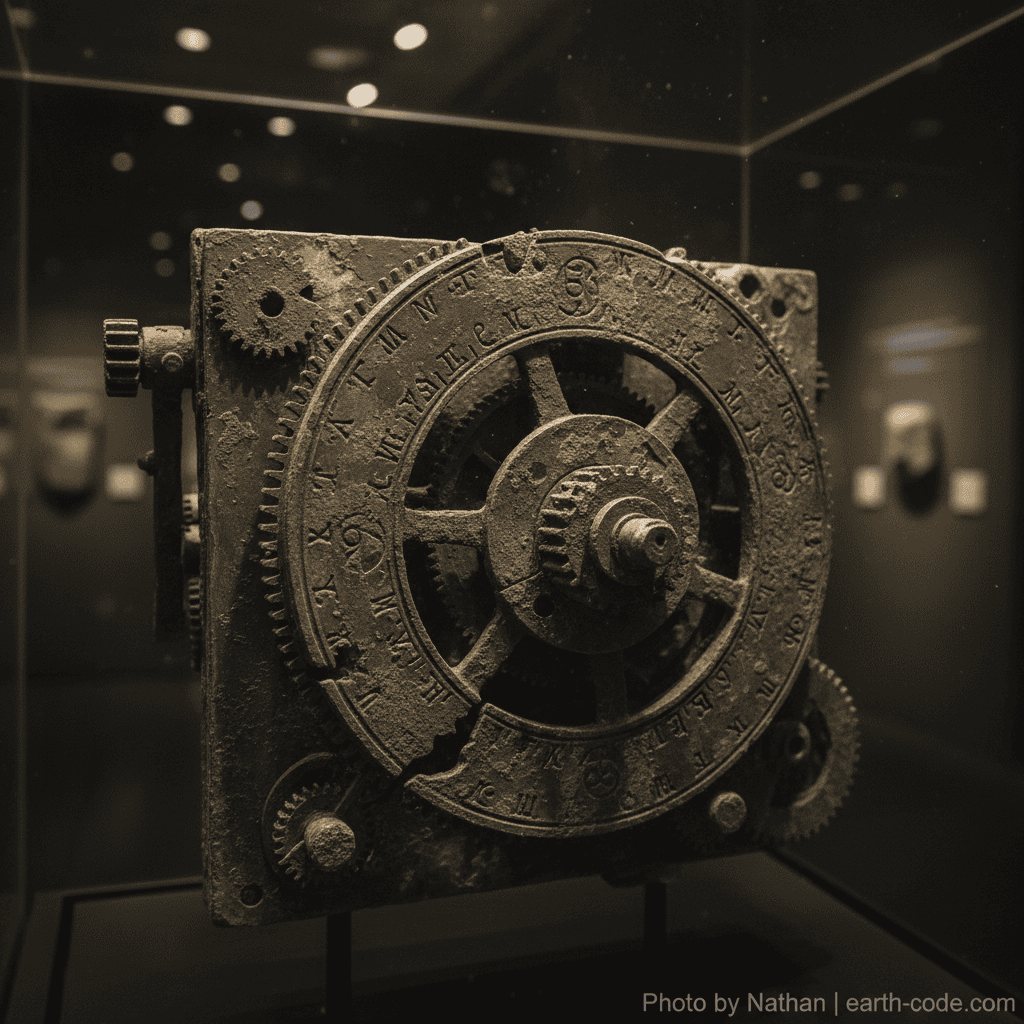
Ancient Greek technology that astounds modern science awaits discovery.
The Antikythera Mechanism: Ancient Greece's Mysterious 2,000-Year-Old Computer
In 1901, sponge divers working off the Greek island of Antikythera made one of history's most bewildering archaeological discoveries. Among the treasures scattered across a Roman shipwreck lay a corroded bronze artifact that would challenge everything historians thought they knew about ancient technology. What appeared to be a simple lump of metal would later reveal itself as the world's first analog computer – a device so sophisticated that similar technology wouldn't emerge again until the 14th century.
A Clockwork Marvel from Ancient Greece
The Antikythera Mechanism, dating to approximately 100-50 BCE, represents an extraordinary leap in ancient Greek engineering. This shoebox-sized device contains at least 30 precisely crafted bronze gears, with some researchers suggesting the original mechanism may have housed up to 70 interconnected components. The level of miniaturization and mechanical precision rivals that of 18th-century clockwork.
Modern X-ray analysis and computed tomography scans have revealed the mechanism's true complexity. The device functioned as a sophisticated astronomical calculator, capable of predicting the positions of the sun, moon, and known planets with remarkable accuracy. It could forecast eclipses decades in advance, track the 19-year Metonic cycle of lunar phases, and even calculate the dates of Olympic Games, which followed a four-year cycle.
Decoding Ancient Inscriptions
Recent technological advances have unveiled hidden secrets within the corroded bronze. High-resolution imaging revealed over 3,400 characters of ancient Greek text inscribed on the mechanism – essentially an ancient user's manual. These inscriptions describe the device's functions and provide insights into the astronomical knowledge of its creators.
The text reveals that the mechanism could display information about 235 lunar months, track the elliptical orbit of the moon, and account for the varying speeds of celestial bodies across the sky. One dial specifically predicted eclipses, including their times, locations, and characteristics such as color and size.
The Mystery of Advanced Ancient Technology
What makes the Antikythera Mechanism so remarkable is the 1,000-year technological gap it represents. No comparable mechanical device appears in the historical record until medieval Islamic and European astronomical clocks emerged in the 13th and 14th centuries. This raises profound questions about the extent of ancient Greek technological capabilities and what other advanced devices may have been lost to history.
Some researchers theorize that the mechanism represents the culmination of a sophisticated tradition of Greek mechanical engineering, possibly linked to the workshops of Rhodes or the intellectual circles of Alexandria. The precision required to manufacture such intricate gears suggests a level of metallurgical and mathematical knowledge that exceeded previously known ancient capabilities.
Legacy of Ancient Innovation
The Antikythera Mechanism stands as testament to the remarkable ingenuity of ancient Greek craftsmen and astronomers. Its existence suggests that the technological dark ages following the fall of Rome may have erased entire traditions of mechanical knowledge that were far more advanced than previously imagined.
Today, the device resides in the National Archaeological Museum of Athens, continuing to yield secrets as new analytical techniques emerge. Each discovery reinforces that ancient civilizations achieved technological sophistication that modern archaeology is only beginning to fully appreciate.
[!] Various theories exist. Information may contain errors.