Mysterious Ancient City in Upper Amazon
LiDAR technology reveals massive ancient civilization ruins beneath Amazon jungle. A discovery that could rewrite history books
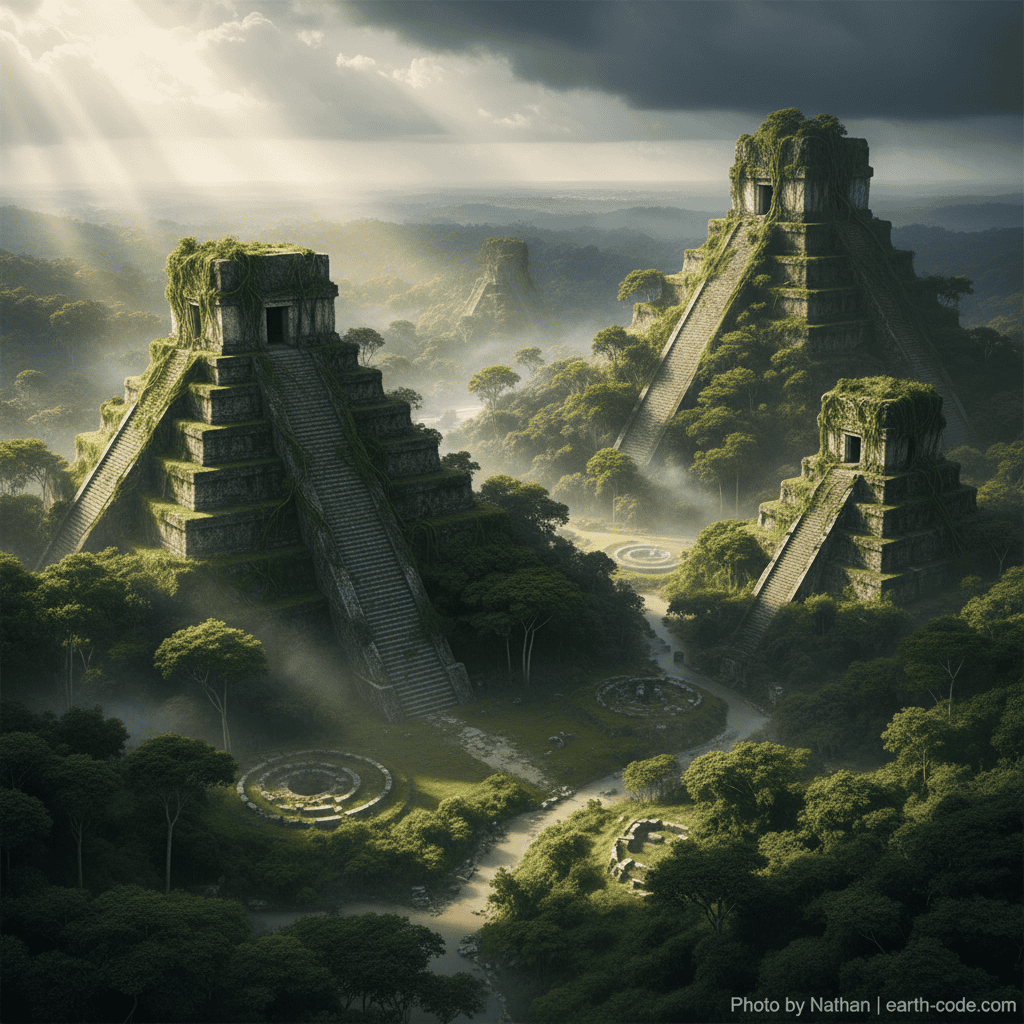
A mysterious ancient metropolis hidden deep in the jungle has finally been revealed.
Hidden Metropolis: LiDAR Unveils Massive Ancient Civilization Deep in the Amazon
The Jungle's Greatest Secret
For centuries, the dense canopy of the Upper Amazon has guarded one of archaeology's most spectacular secrets. In 2024, cutting-edge LiDAR technology pierced through millions of leaves to reveal what may be the largest pre-Columbian urban complex ever discovered in South America—a sprawling ancient civilization that could fundamentally reshape our understanding of Amazonian history.
A City Larger Than London
The numbers are staggering. Researchers have identified over 10,000 individual structures scattered across an area of approximately 650 square kilometers in the Llanos de Mojos region of Bolivia. This makes the newly discovered settlement network larger than many modern cities, with population estimates suggesting over one million inhabitants at its peak around 600-1000 CE.
Dr. Heiko Prümers from the German Archaeological Institute, leading the international research team, describes the discovery as "absolutely mind-blowing." The LiDAR scans reveal not just individual buildings, but an intricate road network spanning hundreds of kilometers, complete with raised highways, defensive earthworks, and sophisticated water management systems including canals and reservoirs.
The settlement pattern suggests a highly organized society with clear urban planning principles. Pyramid-like structures up to 20 meters high dot the landscape, while residential areas show distinct neighborhoods connected by paved causeways. Most remarkably, the entire complex appears to have been built on artificially raised platforms—a massive engineering feat that protected inhabitants from seasonal flooding.
Rewriting Amazonian History
This discovery challenges the long-held archaeological assumption that the Amazon was sparsely populated before European contact. The Casarabe culture, as researchers have named this civilization, appears to predate the more famous Inca Empire by several centuries and rivals the urban complexity of contemporary Mayan cities.
Carbon dating of ceramic fragments and organic materials suggests the settlement flourished between 500-1400 CE, with its golden age occurring around 800-1000 CE. This timeline places the Casarabe culture among the earliest complex urban societies in South America, potentially influencing later civilizations across the continent.
The sophisticated agricultural systems, including forest islands and raised fields covering thousands of hectares, supported this massive population through advanced permaculture techniques. These methods allowed the inhabitants to cultivate crops year-round while maintaining the forest ecosystem—an early example of sustainable urban development.
Technology Reveals the Invisible
The breakthrough came through airborne laser scanning (ALS), which can penetrate dense forest canopy to map ground features with centimeter precision. Over 200 hours of flight time collected data from an area that would have taken decades to survey on foot. The resulting 3D models reveal architectural details invisible to traditional archaeological methods.
The discovery represents just the beginning of what promises to be years of groundbreaking research. As technology continues to unveil the Amazon's hidden past, we may find that this "pristine wilderness" was once home to some of the world's most sophisticated ancient urban centers.
---
[!] Various theories exist. Information may contain errors.